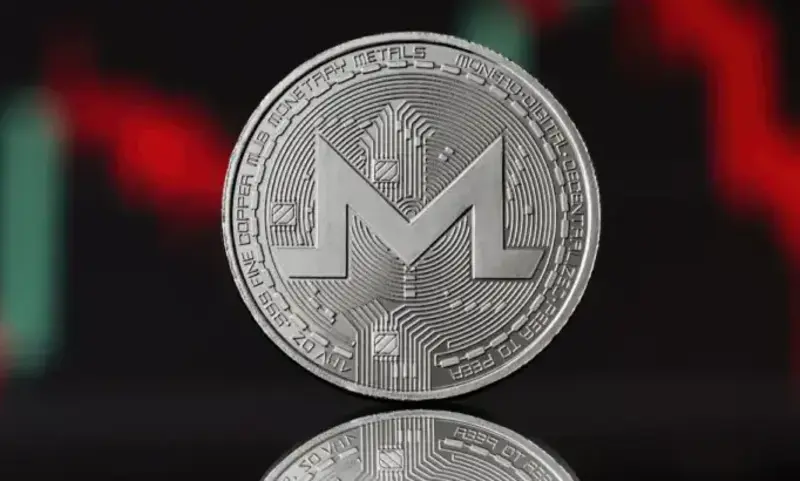
Wagyu’s wrapped Monero token, XMR1, plunged on Hyperliquid after a wallet linked to its issuer began selling.
The sell-off drained liquidity from the spot market and left holders uncertain about redeeming their tokens. Native Monero and its futures held up far better. The transfers raised questions about the security of Wagyu’s bridge and control of its deployer wallet.
Wagyu’s deployer transfers 5.2 million XMR1
Early on November 20, XMR1 fell from $494 to $0.99 in about 35 minutes, touching $0.92. On-chain analysts flagged an apparent 10-token test before the deployer sent two batches of 100,000 XMR1.
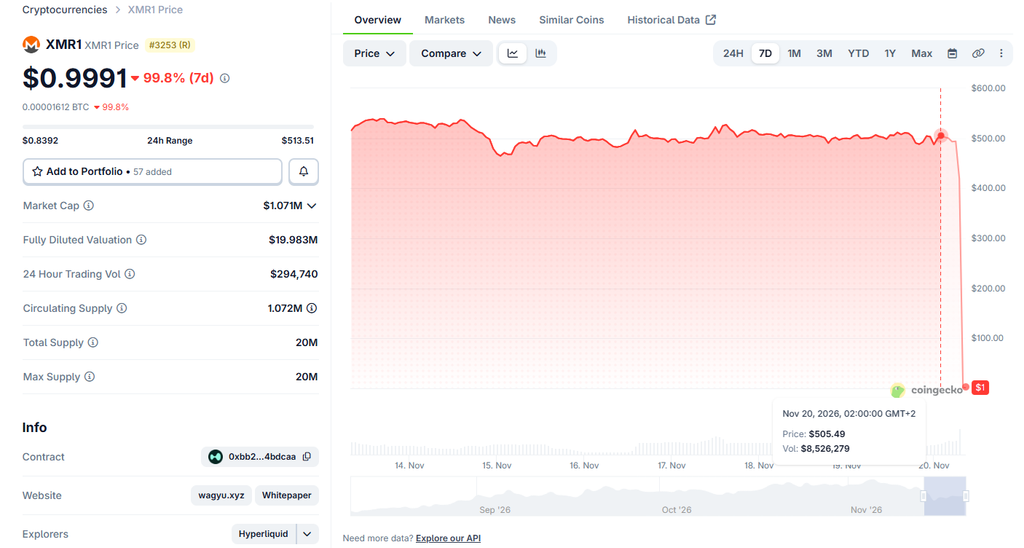
A third transfer sent 5 million tokens to the same wallet. The recipient kept selling small batches into Hyperliquid’s XMR1/USDC order book during the first hour, even near $0.99.

CoinDesk counted about 364,000 XMR1 sold by 07:51 UTC, with roughly 4.83 million tokens still in the recipient’s wallet. Lookonchain tracked 13.22 million USDC in proceeds that the wallet used to buy about 7,467 ETH. BlockBeats traced the conversion through CoW Swap on Arbitrum.
PerpetualCow, the pseudonymous operator behind Wagyu, said market makers absorbed much of the selling. BlockBeats traced about $3.56 million in sales to bids from one suspected market maker.
CoinDesk said the records left open whether someone compromised the deployer’s credentials or used authorized access. Wagyu disclosed a data leak on October 28, and any connection to Friday’s transfers remains unverified.
Wagyu’s Monero backing comes under scrutiny
Wagyu launched XMR1 under Hyperliquid’s HIP-1 token standard to give spot traders exposure to Monero’s price. Wagyu’s documentation says holders can exchange XMR1 for native XMR through its bridge. DexSheet found that the deployer received all 20 million tokens at launch and still held about 13.4 million after the transfers.
On-chain analyst @darth_imposer questioned whether Wagyu held enough native Monero to back the transferred tokens.
The deployer’s XMR1 balance shows how many wrapped tokens it holds. Redemptions depend on the native XMR available through Wagyu’s bridge.
The original coverage urged users to pause new bridge deposits while the cause remained unclear. DexSheet said Wagyu had yet to clarify whether existing holders could still redeem XMR1.
Native Monero holds near $474 as XMR1 bids dry up
Native Monero traded near $474 on centralized exchanges after falling 5.9% over 24 hours. Hyperliquid’s separate XMR perpetual market showed an oracle price near $475.
That market had about $77 million in open interest on November 10. The sharper fallout centered on XMR1 traders, liquidity providers, and Wagyu.
Most of the XMR1 supply remained in reserve, while the sell-off left holders with few bids to exit. A recovery would depend partly on whether buyers return and Wagyu can honor redemptions.
One estimate put the drop in notional value at roughly $2 billion, based on pre-crash token prices. The seller took in about $13.2 million, and the size of customer losses remains unclear.