Runware wants to change how companies build and deploy artificial intelligence infrastructure. The company plans to manufacture modular AI data centers through factory assembly lines, following an approach similar to automobile production.
Its strategy focuses on producing computing capacity faster while reducing installation work at deployment sites. However, delivering that level of manufacturing speed will require the company to overcome production, infrastructure, and cost challenges.
Runware targets 30 MW of AI data center capacity daily by 2028
Runware plans to produce 30 megawatts of AI data center capacity daily by 2028. CEO Flaviu Radulescu said the company wants finished data center units to roll off assembly lines like cars. It also targets bringing each pod online within 48 hours of reaching a prepared site.
The 48-hour target covers installation and setup, not the entire manufacturing process. Each location must already have electricity and network connectivity. Runware plans to complete most assembly and testing inside factories before shipping the units.
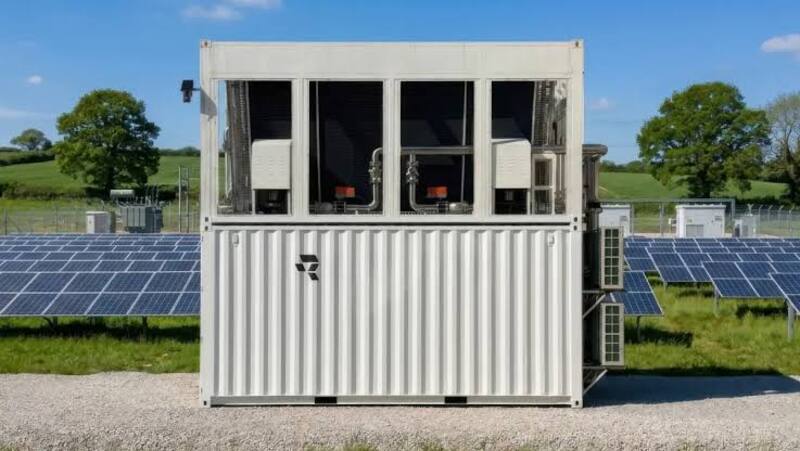
The company currently manufactures its modular AI data centers in Romania. Its Sonic Pod measures 20 feet long and houses approximately 1,200 graphics processing units. Each unit delivers one megawatt of computing power.
Runware also uses a closed-loop liquid cooling system that requires no permanent water connection. This design reduces infrastructure requirements at deployment locations.
Currently, manufacturing one Sonic Pod takes approximately three weeks. Radulescu believes an assembly-line production model could reduce that period to one day. Runware expects to open a second factory by early 2027.
The company also reported $1 billion in committed customer interest, representing more than 20 megawatts of capacity. However, those commitments have not yet translated into completed sales. Runware expects mass production to begin in late 2027.
Nvidia and Crusoe pursue faster AI infrastructure deployment
Runware faces competition from established technology companies developing faster data center deployment models. On October 21, Nvidia introduced its DSX POD reference design for ready-made Vera Rubin systems.
The design allows partners to assemble and test infrastructure before shipping it to customers. Nvidia says deployment at prepared locations can take approximately two weeks. Traditional construction methods can require up to six months.
Crusoe is another company pursuing factory-based AI infrastructure production. Its Spark platform connects a 352,000-square-foot Colorado factory with Crusoe Cloud. The company has operated modular facilities since 2020.
Crusoe says it can deliver productive AI computing capacity within three months. However, the companies measure different stages of deployment. Runware’s 48-hour target covers installation, Nvidia’s two weeks covers deployment, and Crusoe’s three months covers operational computing capacity.
Their business models also differ. Runware sells AI inference services instead of traditional data center space. Customers can provide their own graphics processing units, although the company still relies on Nvidia for networking.
Power constraints and production costs threaten expansion plans
The push for faster modular AI data centers comes as demand for computing infrastructure increases. Grand View Research valued the modular data center market at approximately $29 billion in 2024. It expects the market to reach $75.8 billion by 2030, representing a 17.4% annual growth rate.
Meanwhile, JLL estimates global data center capacity could reach 200 gigawatts by 2030. Meeting that demand could require nearly $3 trillion in investment. JLL also expects inference workloads to overtake AI training demand from 2027.
In Japan, JERA, Dell, and RHAELM are developing a repeatable design for a $15 billion project. The proposed facility will provide 400 megawatts of capacity.
However, faster manufacturing cannot eliminate electricity supply constraints. JLL reports that grid connection waiting periods exceed four years in major markets. The International Energy Agency expects data centers to consume 950 terawatt-hours of electricity annually by 2030.
Public opposition presents another challenge for the industry. Pew found that 54% of Americans consider data centers harmful to the environment. That figure increased from 39% in January.
Regulatory restrictions are also emerging. Texas paused grid approvals for projects under review in August. The state also halted environmental permits in September.
Manufacturing costs create another risk for Runware’s expansion strategy. TechCrunch previously reported that electric vehicle startup Arrival struggled to make mass production profitable. Runware must now demonstrate that its factory assembly model can deliver AI data centers at its proposed speed and scale.