
Bitcoin and Ethereum closed the third quarter with their strongest performances in years as crypto markets rebounded sharply. Institutional demand returned, while major altcoins also recorded broad gains during the three months.
ETF inflows and improving market sentiment supported the recovery after a difficult first half. Traders now enter Q4 watching Federal Reserve policy, regulation, and Bitcoin’s key support levels.
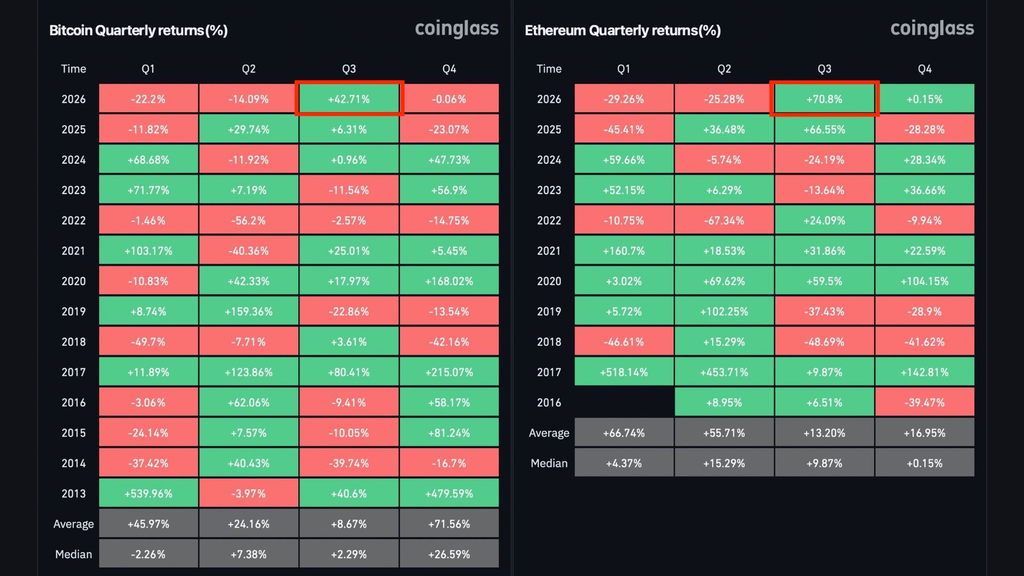
Bitcoin gained 42.71% between July 1 and September 30, according to CoinGlass data. The advance marked Bitcoin’s strongest third quarter since 2017.
Ethereum performed even better, climbing 70.8% during Q3. The move gave Ethereum its best third-quarter performance on record after two consecutive losing quarters.
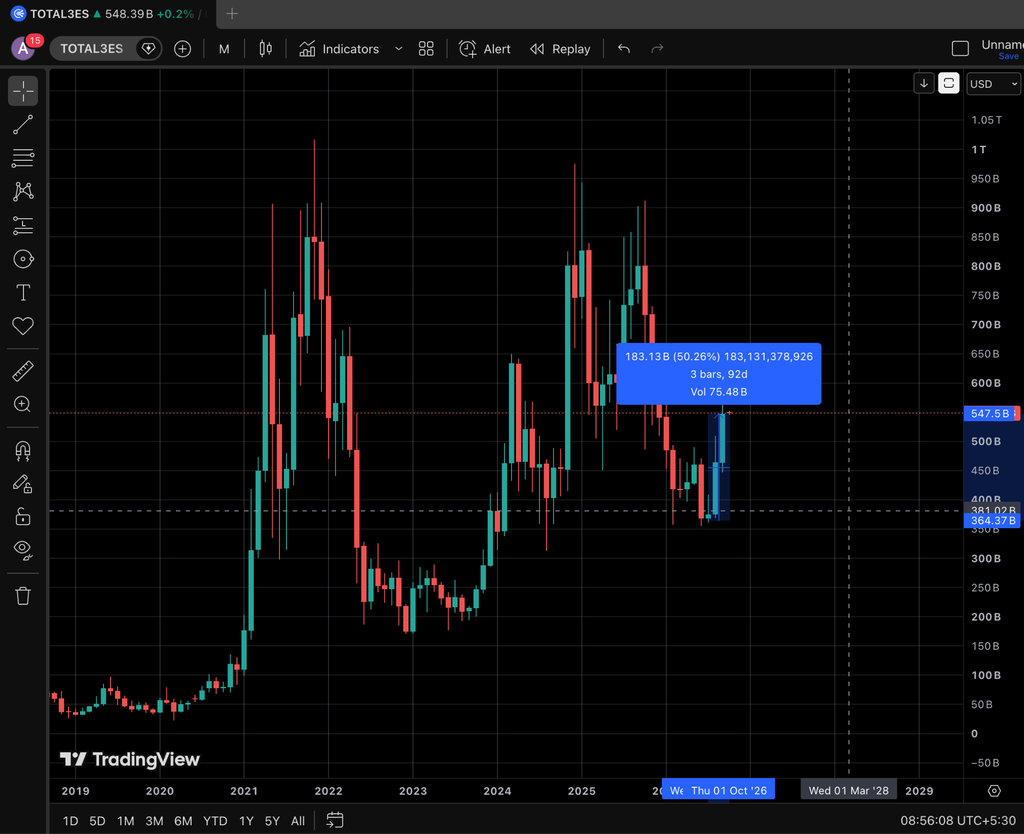
The wider altcoin market also strengthened significantly. TOTAL3ES, which excludes Bitcoin, Ethereum and stablecoins, added about $183 billion during the quarter.
Its market capitalization rose roughly 50%, from around $364 billion to nearly $547 billion.
Zcash ranked among the strongest performers, rising more than 260%. Uniswap gained over 200%, while Chainlink nearly doubled during the quarter.
Hyperliquid reached new highs, while Solana posted its strongest three-month period after ten straight losing months. Quant also recorded a sharp rally during the final weeks of Q3.
Bitcoin ETF inflows return as institutional demand recovers
Institutional demand strengthened during Q3 as spot Bitcoin ETFs returned to positive flows.
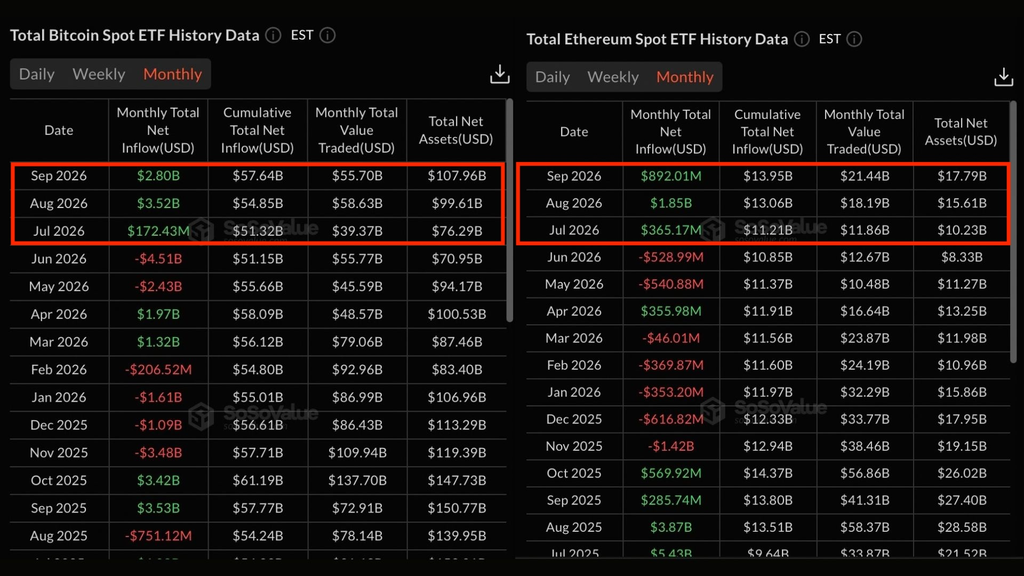
SoSoValue data showed the funds attracted about $6.49 billion during the quarter. August alone generated approximately $3.52 billion in inflows.
The turnaround followed June, when spot Bitcoin ETFs recorded $4.51 billion in outflows.
Q3 also ended three consecutive quarters of net ETF outflows. Total Bitcoin ETF assets increased from $70.95 billion to nearly $108 billion.
Ethereum ETFs followed a similar pattern. The products attracted $3.11 billion during Q3, marking their third-best quarter.
Combined Ethereum ETF assets more than doubled to $17.79 billion.
Corporate treasury buying picked up again too, with Strategy resuming its Bitcoin purchases during the quarter.
However, ETF momentum cooled during September. Bitcoin funds attracted $2.80 billion, below August’s total.
Ethereum ETF inflows slowed to $892 million in September from $1.85 billion during August.
The US Treasury also expanded buybacks of long-dated bonds in August, easing pressure on yields.
Meanwhile, the Securities and Exchange Commission introduced an Innovation Exemption involving tokenized stocks. The move improved market sentiment despite continued uncertainty around the CLARITY Act.
Bitcoin faces $80,000 test before October Fed meeting
Traders now turn toward the Federal Reserve’s October 27-28 meeting as Q4 begins.
A softer-than-expected PCE inflation report on September 30 reduced expectations for an October interest-rate increase. However, upcoming inflation and employment data could change those expectations.
Stronger inflation or jobs data could keep Treasury yields and the dollar elevated. Those conditions have historically created additional pressure for crypto markets.
Bitcoin’s $80,000 level has therefore become an important technical area heading into Q4.
Holding above $80,000 keeps $87,400 and $90,000 as potential upside targets. A sustained break below that support could weaken momentum.
Seasonality also remains supportive for Bitcoin. CoinGlass data shows Bitcoin has recorded a median Q4 return of 26.59% since 2013.
Ethereum’s seasonal record appears weaker. Its median fourth-quarter return stands at only 0.15% over the same period.
Regulation remains another unresolved factor. The CLARITY Act remains stalled in Congress, leaving traders focused on future US crypto legislation.
Any legislative progress could influence whether institutional demand continues through the final quarter of 2026.