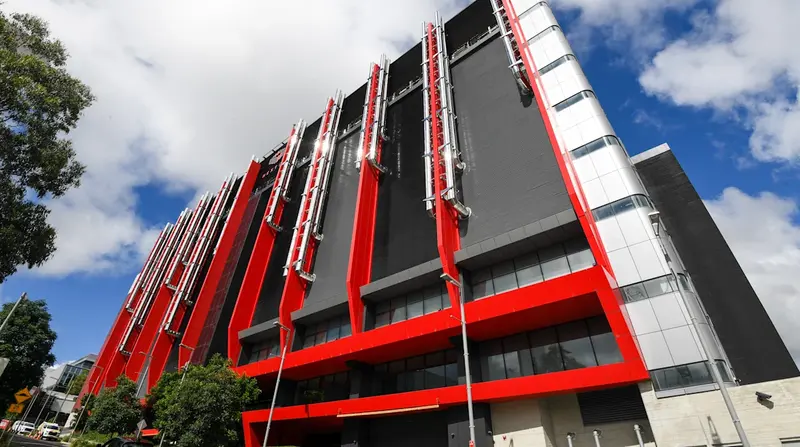
Australia data center investment could exceed $155 billion as artificial intelligence demand attracts global technology companies and infrastructure capital.
Aware Super CEO Deanne Stewart told Monday’s AFR summit that resolving grid, zoning, construction, and site constraints could unlock investment.
AirTrunk reported increased interest from Google, Apple, Meta, Amazon, and Microsoft. Developers also face rising land and construction expenses.
“Australia has many advantages. We have significant advantages in Australia in terms of land, renewables, and security, and while power and grid connections are constraints on growth, they’re not putting people off. What is important is consistency, consistency, and consistency in terms of government policy and taking the historic view,” Stewart said.
Global Capital Supports Data Center Expansion
Westpac IQ estimated investment could surpass $155 billion, deliver a roughly $75 billion net GDP boost, and support 400,000 jobs and wider spillovers.
Stewart said global allocations total US$750 billion, while higher projections place next year’s figure above US$1 trillion.
“It’s certainly impacting markets all around, with a return of more than 20% per annum. For Australia, that’s a great opportunity to do something significant with the investment coming here,” she said.
Energy executive Sabooh Whitelaw said growing US demand could produce commitments in the coming years.
Power and Land Limit Development
AI data centers could consume 13% of Australian electricity by 2035–36, up from 3 percent. AEMO warned demand could outpace grid construction and increase consumer costs.
Opposition remains limited. New South Wales activists want an expansion freeze, while a Tasmanian petition with more than 10,000 signatures secured a parliamentary inquiry.
“The cost of land is now a huge consideration for us, and we’ll see centers gravitate outwards over time, away from the city fringe,” Equinix APAC real estate senior director Tim Robinson said.
CommBank economist Lucinda Jerogin said power, water, grid access, and sites will determine locations. Proposals extend beyond New South Wales and Victoria.
“We’re starting to see more projects proposed, as you say, in the Northern Territory, and in places like South Australia, where some of those electricity and grid constraints are less severe,” she said.
AI Growth Brings Wider Economic Effects
AI models demand more computing power than traditional services, requiring high-performance chips, advanced cooling, dependable electricity, and large facilities.
Investment could benefit builders, engineers, energy providers, telecommunications companies, and property owners. Renewable-powered areas could attract projects.
However, connection, approval, and site delays could postpone developments or redirect them overseas.
Bloomberg Economics economist James McIntyre warned projects could divert trades and construction capacity from housing and renewable infrastructure, worsening constraints.
CreditorWatch chief economist Ivan Colhoun said expansion could raise materials prices, labor demand, and wages. Therefore, declining home approvals and softer house prices may influence monetary policy differently than usual.