The UK Financial Conduct Authority (FCA) has warned young investors about growing exposure to AI investment scams.
Fraudsters increasingly use artificial intelligence to create convincing financial promotions and impersonate public figures. Younger investors often trust their ability to identify fraudulent content despite overlooking essential safety checks. The regulator has urged consumers to verify investment firms before committing their money.
FCA Identifies Confidence Gap Among Young Investors
According to the FCA, 74% of investors under 35 believe they can identify AI-generated investment scams. Meanwhile, 56% reported encountering suspected AI-generated financial promotions over the past year.
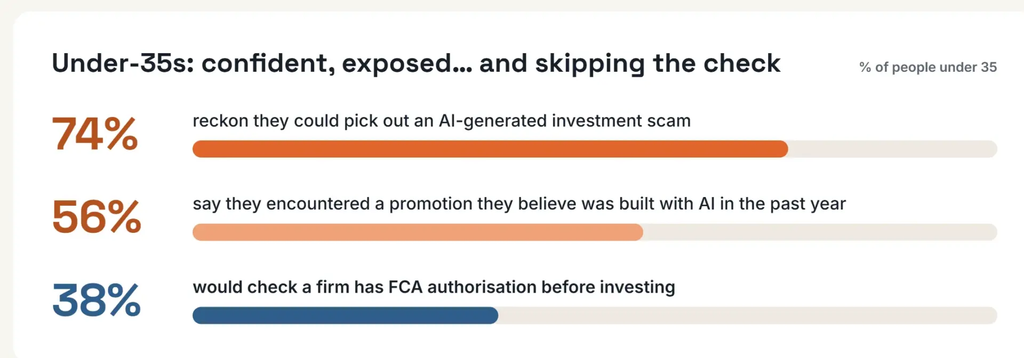
However, only 38% said they would verify a firm’s FCA authorization before investing. That figure increases to 73% among people aged over 65.
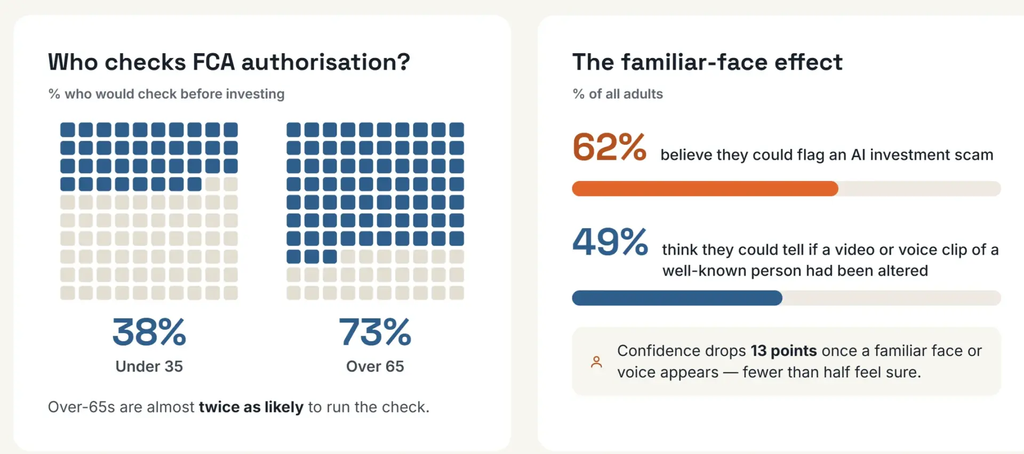
Across all age groups, 62% of adults believe they can recognize AI investment scams. Yet only 49% feel confident identifying manipulated videos or audio recordings featuring prominent individuals.
Respondents most frequently identified financial expert Martin Lewis when recalling suspected fraudulent promotions involving public figures.
Kantar conducted the FCA survey between October 20 and 26, 2026, involving 2,558 respondents aged 16 and above. Around 33% reported encountering investment promotions they suspected involved artificial intelligence.
Separate research found that 56% of investors and prospective investors aged 18 to 40 trust AI tools. Television and radio received 47%, newspapers recorded 46%, and social media influencers attracted 29%.
Additionally, 44% mistakenly believe regulators oversee AI-generated financial information. Another 38% consider chatbot responses sufficient for making investment decisions.
FCA consumer investments director Lucy Castledine acknowledged AI’s usefulness in financial research but stressed the importance of independent judgment.
AI Investment Scam Reports Rise Nearly 400%
Report Fraud recorded 956 fraud reports mentioning suspected AI involvement during 2025/26, compared with 193 during 2024/25.
The figures represent an increase of approximately 395%. Meanwhile, investment fraud victims lost an average of £28,188 during the latest reporting year.
Crypto companies have also encountered increasingly sophisticated deepfake scams involving recognizable personalities.
Coinbase reported blocking $4.7 million in transfers during November after fraudsters used an AI-generated impersonation of Elon Musk.
The scammers hijacked a Tesla demonstration livestream to promote a fraudulent cryptocurrency giveaway. Hundreds of Coinbase users attempted transfers within approximately two hours.
Meanwhile, a US federal court sentenced Florida resident David Anthony Sanchez, 36, to 47 months in prison.
Federal prosecutors said Sanchez used an AI-cloned recording of streamer N3ON’s voice to deceive memecoin organizers. The fraudulent endorsement helped him obtain approximately $260,000 in cryptocurrency.
UK Finance also reported £1.28 billion in payment fraud losses during 2025. Investment fraud accounted for £221.5 million, representing a 40% annual increase.
It remained the largest category of authorized push payment fraud.
FCA Urges Investors to Verify Financial Firms
The FCA encouraged consumers to use its Firm Checker tool before engaging with financial service providers.
The platform identifies authorized businesses and highlights companies operating without regulatory permission.
Sheree Howard, the FCA’s executive director of authorizations, warned that artificial intelligence makes fraudulent promotions easier to produce.
She also noted that these technologies make scams increasingly difficult to recognize.
Howard urged consumers considering investments, pensions, or loans to verify providers through the regulator’s official platform before making financial commitments.