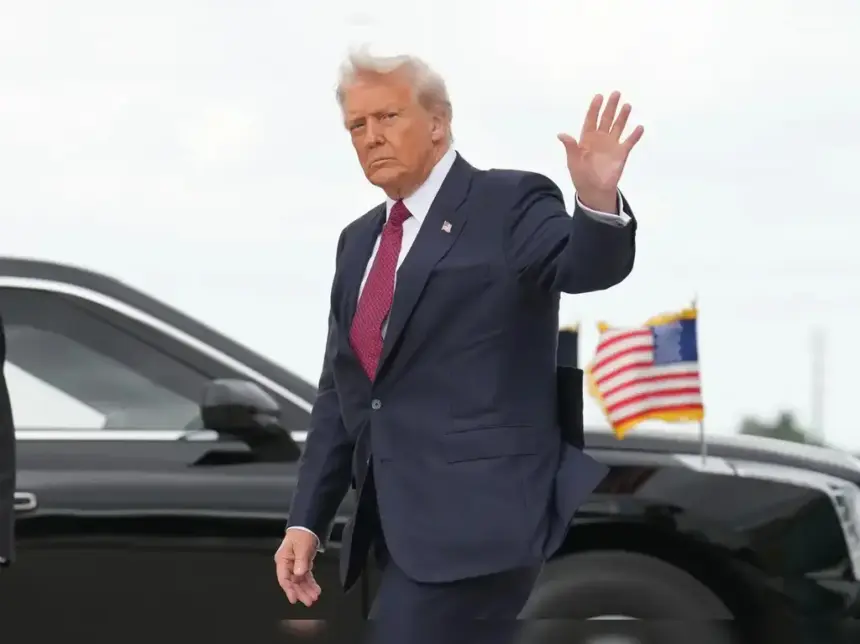
The CEO of Bank of America, Brian Moynihan, thinks that US President Donald Trump will probably ease trade tensions in 2026.
Moynihan observed that although tariffs have upset economic growth, a downturn can be projected by the markets.
Tariff impact on the economy
Moynihan clarified that the Trump tariff has been impactful on the US economy. The average rates grew not least 2 to 14% ever since he came to power. The president has introduced a 10% tariff on imported goods, but has increased the tariffs to an average of 15% on major trading partners. Moynihan highlighted that this change is moderate, and it means that there will be a possibility of a decrease in the tension in the market.
The second quarter had significant difficulties for small businesses, which was mainly attributed to tariff increases and the uncertainty of trade policies. Moynihan indicated that companies were relieved later when the rates eased. He emphasized that small businesses face present-day challenges more to do with employee shortages as opposed to tariffs.
US-China and trade in the region
Trade with China has been one of the issues of concern, as pointed out by Moynihan, in addition to the North American partners. In 2026, the US-Mexico-Canada agreement will be reviewed, and it may have an impact on the tariffs and trade relations. Nevertheless, Moynihan was optimistically pessimistic regarding the improvement and the general market stability.
He proposed that the market must anticipate average tariffs of about 15% besides the introduction of higher rates on the countries that challenge US trade practices or countries that do not reduce non-tariff barriers. His comments reflect that he focuses on selective trade measures other than global escalation.
Legal and policy implications
Kevin Hasset, the Director of the National Economic Council, was confident that the Supreme Court decision would support the administration on the issue of the legality of tariffs. Analysts caution that a decision made in favor of the tariffs might make the government pay up to 100 billion.
The report by Hassett was also characterized by the increasing potential of the $2,000 tariff rebate checks, which was a plan that Trump had already put forward. He forecasted that the president would present a proposal to Congress formally next year, as it was an attempt to mitigate the costs of trade-related expenses to the concerned parties.
The prospects in 2026 are optimistic of reduced trade pressure, with Bank of America anticipating de-escalation but not an escalation. The remarks made by Moynihan give markets and businesses a fair chance of apprehension as they continue to maneuver in the current trade developments.