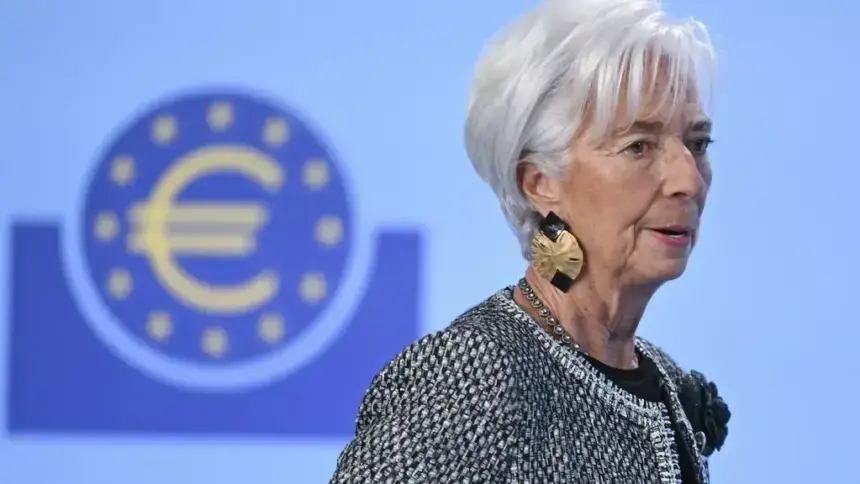
European Central Bank (ECB) President Christine Lagarde has raised concerns over former U.S. President Donald Trump’s attempts to exert control over the Federal Reserve.
She warned that his efforts to remove key Fed officials, including Jerome Powell and Lisa Cook, could pose serious risks to both the U.S. and global economy. Lagarde emphasized the critical importance of the Fed’s independence for maintaining economic stability, given the U.S.’s role as the world’s largest economy.
Trump’s Influence on U.S. Monetary Policy
Lagarde expressed concern about the pressure Trump has put on the Federal Reserve to lower interest rates, including repeated attacks on Powell for not cutting short-term rates. Trump’s campaign to fire key Federal Reserve officials has raised alarms internationally. Lagarde stressed that monetary policy must remain free from political interference. Should the Fed lose its autonomy, it could destabilize not only the U.S. economy but the broader global financial system.
Impact of Illegal Tariffs on Global Trade
Lagarde also addressed the legal challenges surrounding Trump’s trade policies, particularly his tariffs. A recent ruling by a U.S. appeals court declared most of Trump’s tariffs illegal, adding further uncertainty to an already unpredictable global economy. The ECB President highlighted that the ruling contributes to a climate of instability. For the European Union, which is closely connected to U.S. policies, these developments add risks to the eurozone economy.
Eurozone Inflation Under Control Amid Global Uncertainty
Despite global economic challenges, Lagarde confirmed that inflation in the eurozone remains under control. With inflation holding steady at the ECB’s 2% target, the central bank has refrained from changing interest rates. Lagarde indicated that the ECB will continue its efforts to ensure price stability. However, some economists anticipate a possible rate cut in December. Meanwhile, inflation concerns persist in Germany, where prices have risen to 2.1%, driven by food costs and slower energy price declines.
Lagarde’s comments reflect the broader concerns within the global economic community about the potential disruption of U.S. monetary policy and trade relations. With inflation under control in the eurozone and ongoing uncertainty surrounding the U.S., the global economy faces significant risks moving forward.