
Former Coinbase Chief Technology Officer Balaji Srinivasan has argued that the traditional economy is falling behind as technology and digital platforms become the system in the modern world.
In a recent contribution to X, he pointed out the transition of the legacy industries to an internet-first economy, particularly in the developed country of the United States.
Shift to the Internet Economy
The points by Srinivasan highlight the change in direction that started following the 2008 financial crisis. Transactions and communications have since then shifted more towards the online. He forecasts that the second level will be more industries, such as governments and societies, adopting the internet as their central preoccupation. Another reference to the growth and hegemony of technology in the last decade, and specifically in 2023 and 2024, is the performance of the so-called Magnificent Seven tech giants Apple, Microsoft, Amazon, Alphabet, Meta Platforms, Nvidia, and Tesla, he also said.
The difference in the performance of these large technology firms compared to other firms in the S&P 500 shows that the digital economy has grown much faster than traditional industries. According to Srinivasan, this tendency is an indicator of the transition to an internet-based world economy.
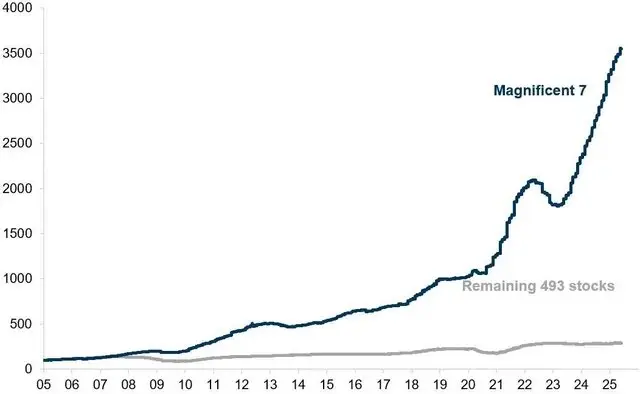
Source: Balaji’s X post
Network States and the Role of Cryptocurrency
Srinivasan is credited with popularizing the idea of Network States, which, he feels, may develop into the new versions of nation-states of this century. Srinivasan asserts that these digital communities will be internet-based currencies like cryptocurrencies. He equates this process to the Industrial Revolution, whereby societies changed to industrialized economies. This transition might lead to a dramatic change in economic and social organizations.
Srinivasan, however, recognizes the impediments to this change. New technologies may not be adopted quickly by conventional financial systems and government agencies, which may act as a barrier to innovation. These challenges notwithstanding, he has hope concerning the future of the internet-first economy.
U.S. Regulatory Support for Innovation
U.S. regulators are responding to this trend by trying to enforce the use of blockchain technology and artificial intelligence in the financial system. In September, the U.S. Securities and Exchange Commission (SEC) and the Commodity Futures Trading Commission (CFTC) declared the transition to 24/7 capital markets. The move is supposed to streamline the traditional financial system into the crypto industry, which is 24-hour.
The regulators also made it clear that clear rules need to be established on event contracts and perpetual futures to facilitate the efficient operation of the market. Also, the U.S. government is cooperating with blockchain oracle providers such as Pyth Network and Chainlink to increase economic data transparency and improve the population’s budgeting with the help of blockchain technology.
Srinivasan looks at the future of the global economy as a major shift driven by tech companies and blockchain technology. The attempts of U.S. regulators to adjust the financial system to new digital reality conditions speak of the increasing approval of the shift. The shift to an internet-first economy seems to be growing faster, although there are still some obstacles.