
Bitcoin fell through a closely watched price threshold and approached its 200-week moving average.
Traders are watching whether a level that drew buyers in past downturns will hold through the weekly close.
Withdrawals from U.S. spot Bitcoin ETFs continued as losses spread across the crypto market. A selloff in AI stocks and rising expectations for a Federal Reserve rate hike added to the pressure.
Bitcoin Tests Long-Term Support Near $68,000
Bitcoin fell to $68,408 early Friday, its lowest level since Aug. 20, according to The Block. That marked a 7% drop in 24 hours, with losses exceeding 7% over two days.
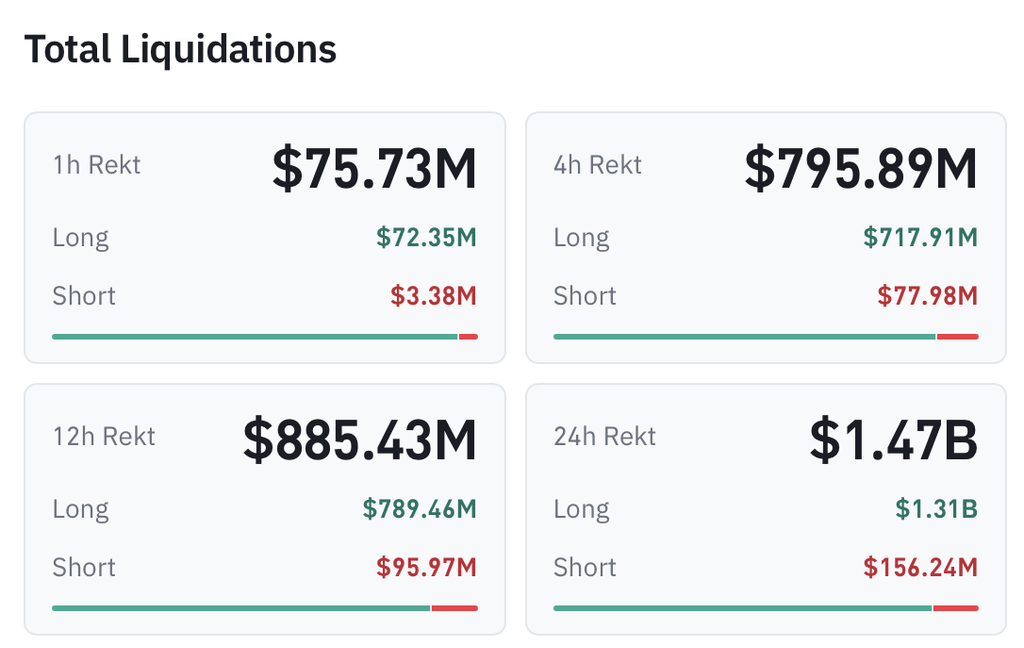
Total crypto market capitalization fell more than 9% over the past week. CoinGlass data showed that liquidations of long positions across crypto reached $1.31 billion in 24 hours.
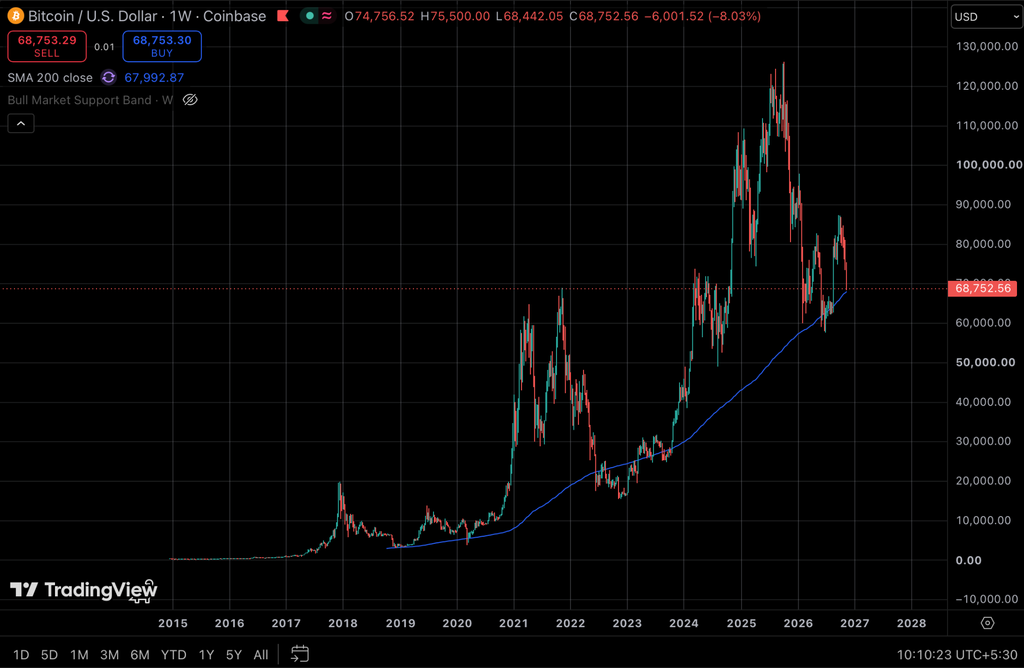
Bitcoin traded just above its 200-week simple moving average, near $67,990. The average smooths nearly four years of price data, so it moves slowly during sharp selloffs.
The line ran close to market lows in 2015, the 2018–19 downturn and the 2020 selloff. Some long-term buyers have used those tests as entry points.
Bitcoin rebounded after dipping below the average earlier this year. In 2022, however, it traded below the line for months before reaching its low.
A weekly close above the average would keep long-term support in place. A close below it could signal a deeper correction.
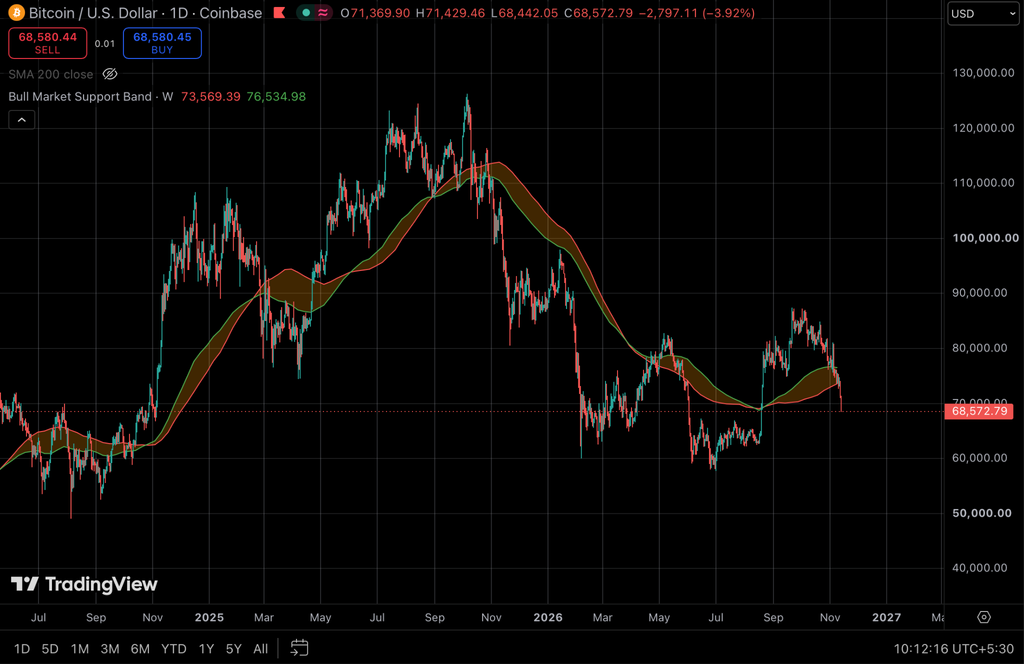
Any rebound would face the bull market support band between $73,570 and $76,530. Bitcoin tested the band in early November before the selloff took it below both lines.
The band combines the 20-week simple moving average and the 21-week exponential moving average.
Traders use it to gauge whether buyers are still supporting pullbacks during an uptrend. The former support zone could now act as resistance.
Spot Bitcoin ETF Outflows Reach $1.88 Billion
U.S. spot Bitcoin ETFs recorded net withdrawals in seven of November’s first eight trading sessions.
Net outflows reached about $1.88 billion through Nov. 11, based on figures from SoSoValue and other flow trackers.
About $1.44 billion left over five straight sessions, including $299.9 million on Nov. 11. The funds’ combined net assets fell from $102.26 billion on Nov. 4 to $93.70 billion on Nov. 11.
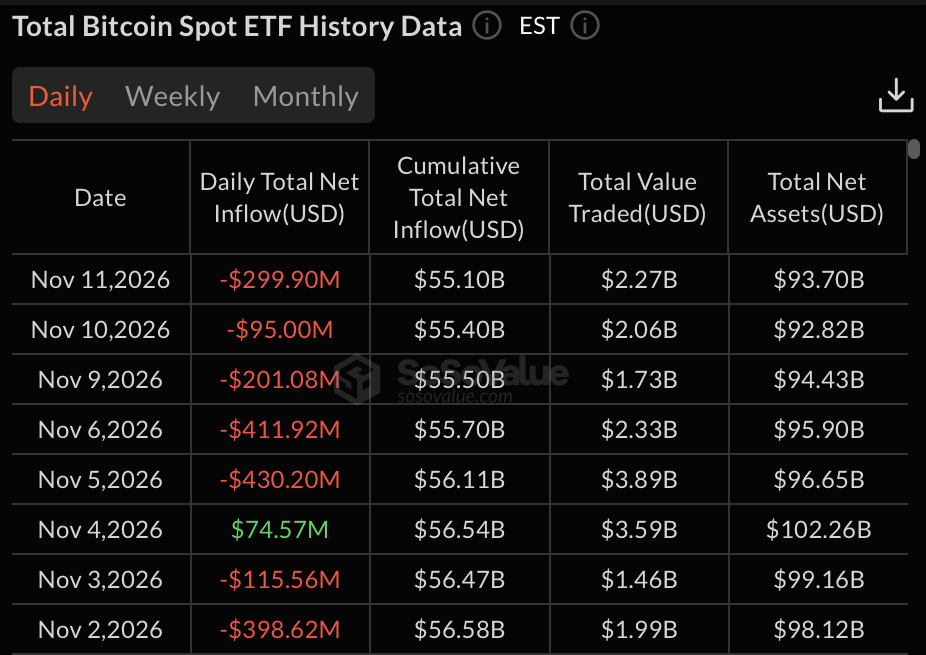
The largest daily withdrawal through Nov. 11 came on Nov. 5, when investors pulled $430.2 million.
The Nasdaq fell 5.52%, its sharpest daily decline since April 2025. Nvidia lost about 9%, and Bitcoin dropped below $76,000.
Nvidia Turmoil and Inflation Add Pressure
Bitcoin has often moved alongside AI-heavy tech stocks in 2026. Some miners have also sold Bitcoin to finance AI data center projects, CoinDesk reported.
Nvidia’s board announced Jensen Huang’s immediate resignation as CEO on Nov. 12, adding uncertainty to the sector.
Meanwhile, October core consumer prices rose 0.3%, above economists’ 0.2% forecast. Fed Governor Christopher Waller said before the release that such a reading would warrant considering a half-point hike.
Traders priced in some chance of that move ahead of the Fed’s Dec. 8–9 meeting, less than four weeks away. The 10-year Treasury yield rose above 5%, making interest-bearing government bonds more attractive relative to Bitcoin, which pays no interest.