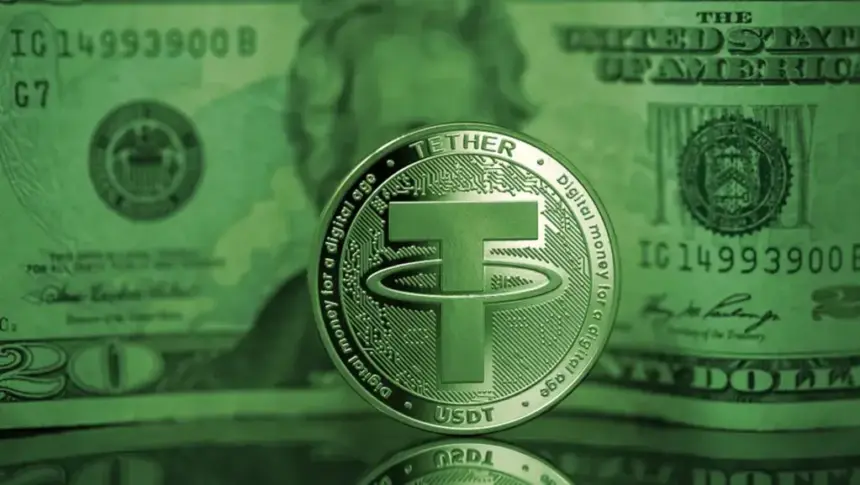
Tether USDT reaches $188B record as stablecoin adoption spreads beyond crypto markets, signaling strong demand for digital dollar alternatives worldwide.
The latest milestone confirms continued growth in the stablecoin sector as usage expands beyond trading into payments and financial infrastructure.
The record supply also highlights Tether’s dominant position in a rapidly evolving market.
USDT supply hits a new high amid rising global demand
Tether’s flagship stablecoin has climbed to a circulating supply of $188 billion, setting a new all-time high.
The figure, confirmed by CEO Paolo Ardoino, builds on earlier data from March that placed its market cap at $184 billion, representing roughly 58% of the total stablecoin market at the time.
The growth reflects increasing reliance on USDT, particularly in regions with limited access to traditional banking systems.
More than 550 million users globally are estimated to use the stablecoin for transactions and savings, reinforcing its role as a widely accessible digital dollar.
Stablecoins, which are typically pegged one-to-one with fiat currencies such as the US dollar, have become essential tools in digital finance.
They offer a bridge between conventional financial systems and blockchain-based networks while maintaining relative price stability.
Financial strength and recovery from earlier decline
Tether’s financial position has remained strong despite temporary fluctuations earlier this year. Reports indicate the company held around $187 billion in assets and generated over $10 billion in profit in 2025. Its reserves stood at approximately $192.9 billion, alongside $6.3 billion in equity, providing a solid buffer for market volatility.
USDT supply experienced a short-term decline in early 2026, with a $1.5 billion drop in February following a $1.2 billion reduction in January.
This marked the largest contraction since the collapse of FTX. However, Ardoino attributed the decline to internal reallocations rather than reduced demand, pointing to continued strong usage in countries such as Argentina.
Distribution metrics also suggest a more balanced ecosystem compared to some competitors. The largest USDT sender accounts for less than 5% of activity, which is significantly lower than the concentration levels seen in other tokens.
Meanwhile, the amount of USDT circulating on the Tron network has reached nearly $86.7 billion, indicating sustained liquidity and demand.
Stablecoins expand into mainstream financial systems
Stablecoins are moving beyond their original role as liquidity tools for crypto trading and are becoming integrated into real-world financial applications.
Companies across different industries are exploring their use in payments, remittances, and treasury operations.
DoorDash is developing a stablecoin-based payment system in collaboration with Tempo to improve payouts for merchants and delivery workers across more than 40 countries.
The system aims to provide faster processing, lower transaction costs, and near-instant settlements while maintaining performance during high transaction volumes.
The infrastructure will also support structured financial operations through compatibility with global messaging standards, enabling smoother cross-border transactions.
DoorDash reported strong operational growth, completing 903 million orders worth $29.7 billion in the fourth quarter of 2025, and expects further updates in its upcoming earnings report.
Other major financial players are also advancing stablecoin adoption. Stripe agreed to acquire the stablecoin platform Bridge for $1.1 billion in 2024, while Mastercard and Visa have expanded their involvement through acquisitions and upgrades to their settlement systems.
The continued expansion of stablecoins into mainstream finance suggests that digital assets like USDT are becoming a core component of global payment infrastructure.