Strategy Bitcoin sales policy has drawn criticism from JPMorgan, which argues that the company’s decision to allow selective Bitcoin sales could introduce new risks to the cryptocurrency market.
The bank said the framework changes the role of one of the market’s largest Bitcoin buyers by creating the possibility of future selling activity.
Strategy announced its Bitcoin monetization program on Monday, allowing the company to sell part of its 847,363 BTC holdings when necessary.
The proceeds may be used to support preferred dividend payments and share buybacks. The initiative forms part of the company’s Digital Credit Capital Framework, introduced after months of criticism regarding its capital position during declines in both Bitcoin and MSTR prices.
JPMorgan highlights market flow concerns
In a report published Wednesday, JPMorgan analysts led by Nikolaos Panigirtzoglou said the new framework introduces avoidable “two-way” flow risk into the crypto market.
They noted that Strategy has been one of Bitcoin’s most consistent corporate buyers for years and has accounted for around 70% of total net digital asset inflows this year.
According to the analysts, the policy changes market dynamics because investors must now consider the possibility that the company’s large Bitcoin holdings could be sold under certain circumstances.
JPMorgan argued that this represents a meaningful shift from Strategy’s previous position as a steady accumulator of the digital asset.
Cash reserves remain a key focus
JPMorgan also recommended that Strategy strengthen its balance sheet by raising additional cash through the issuance of common equity. The bank believes larger cash reserves would improve investor confidence by reducing the likelihood that Bitcoin holdings would need to be sold.
The company currently holds approximately $2.55 billion in cash, which JPMorgan estimates is sufficient to cover about 17 months of preferred dividend and interest obligations. However, the analysts argued that the existing reserve is below a more comfortable level.
They said, “a higher coverage of 24-36 months would be needed to make investors more comfortable with the idea that Strategy would not need to sell bitcoins in the foreseeable future.”
Analysts differ as shares recover
While JPMorgan expressed caution, Benchmark Equity Research maintained a Buy rating on MSTR and kept its $570 price target following the announcement of the capital framework.
Analyst Mark Palmer described the policy as “formal permission” to reverse Strategy’s capital allocation approach during periods of market stress and viewed it as beneficial for shareholders.
Market performance also improved after the announcement. MSTR shares climbed 12.6% to $92.68 on Monday, while STRC advanced about 10% to approximately $83.67 after trading below $75 the previous week.
By Wednesday, MSTR had risen above $100, adding about $5 billion in market value and gaining 27% from Friday’s low. At the time of writing, MSTR traded at $100.83, up 7.93% on the day.
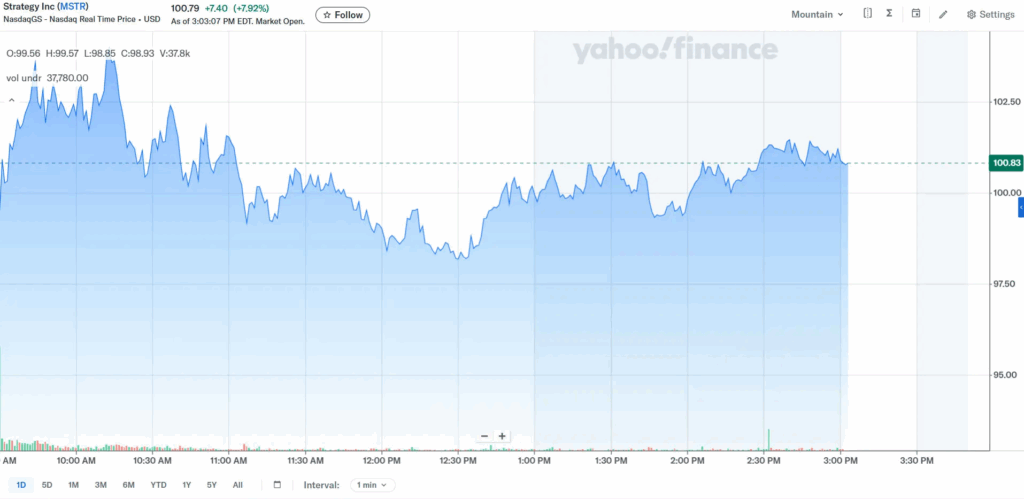
MSTR daily price chart. Source: Yahoo Finance