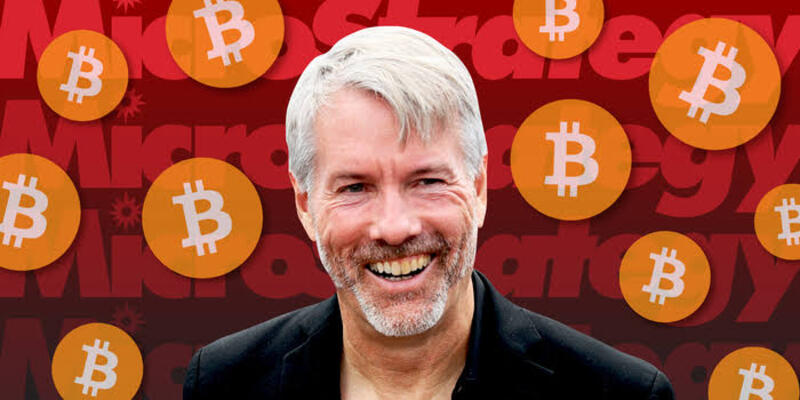
Bitcoin’s economic energy is central to Michael Saylor’s latest argument about money, scarcity, and long-term value preservation.
The Strategy chairman published an essay on August 15 outlining why he believes Bitcoin conserves economic value better than gold or fiat currencies.
Written with Robert Breedlove and titled “What Is Money?”, the essay describes money as technology for storing labor’s value. It also explains how that value can move across time and distance. Saylor refers to this stored value as “economic energy” and asks how efficiently monetary systems preserve it.
How Saylor Defines Economic Energy
Saylor argues that sound money should preserve the value created through work without suffering significant “monetary entropy.” He uses that term to describe the erosion of value as money moves through time or across distance.
The essay credits gold for scarcity and durability, but highlights several weaknesses. Gold is heavy, expensive to transport, costly to secure, and difficult to audit. Once integrated into financial systems, it also depends heavily on custodians.
Government-issued currencies solve many portability problems associated with gold. However, their supply and operating rules remain controlled by governments and central banks.
Why Saylor Favors Bitcoin
The essay describes Bitcoin as digital monetary energy with no physical mass and no central issuer. Its total supply is capped at 21 million coins, a feature central to Saylor’s argument about scarcity.
Saylor’s position is that Bitcoin loses less economic energy than competing monetary systems. His broader case focuses on how effectively an asset can preserve purchasing power while remaining transferable across long distances.
The essay arrived during a wider debate about whether advanced artificial intelligence could eventually reduce the importance of money. Elon Musk has argued that AI-driven abundance could make money less relevant through what he calls a universal high income.
Saylor Challenges Musk’s Money Outlook
Saylor rejected that view during a Diary of a CEO interview with host Steven Bartlett published earlier this month. He argued that scarcity would continue shaping human behavior even in a more abundant economy.
Saylor told Bartlett that people would keep pursuing scarce goods linked to status because “we’re status-oriented animals.” His argument suggests that abundance in ordinary goods would not remove competition for limited assets.
Strategy currently holds 840,447 BTC, giving it the largest disclosed corporate Bitcoin position. The company has also sold Bitcoin in recent months.
Strategy offloaded 1,690 BTC for about $108.6 million in early August to repurchase STRC preferred shares. Chief Executive Phong Le has said the company expects to resume Bitcoin purchases before year-end.
The essay therefore places Bitcoin within Saylor’s broader monetary framework, centered on scarcity, portability, durability, and resistance to value erosion.