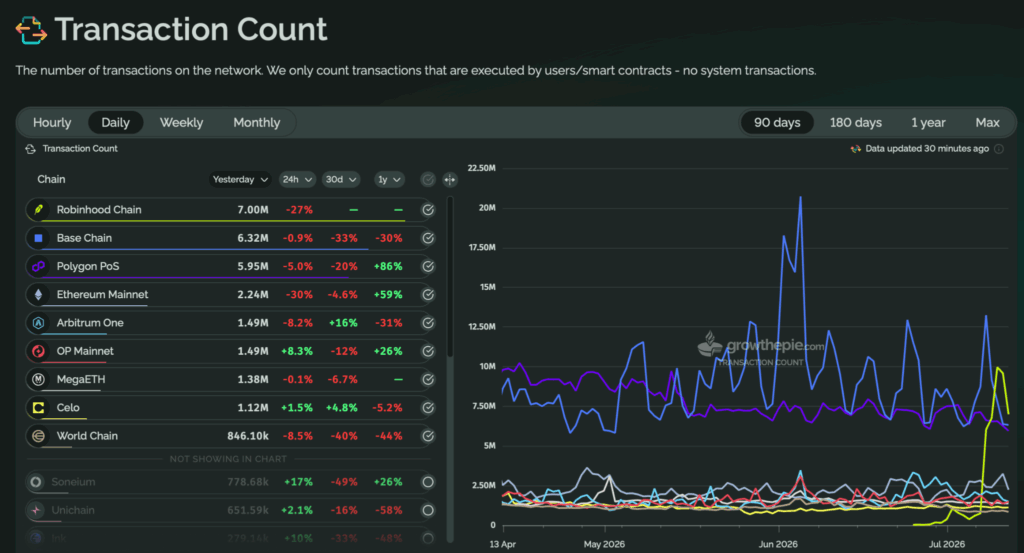
Robinhood Chain crossed seven million daily transactions less than two weeks after its July 1 mainnet launch, moving ahead of Base and becoming the busiest Ethereum Layer 2 network by overall daily activity.
The network also surpassed $3 billion in decentralized exchange volume. Its 24-hour DEX volume ranked third among all networks, behind Binance Smart Chain and Solana, according to DeFiLlama. Growthepie data showed Robinhood Chain processing more than seven million transactions, while Base recorded 6.32 million.
The climb placed the new network above a Coinbase-backed Layer 2 that has operated for two years. Much of the early growth developed alongside subsidized gas fees and rising memecoin trading rather than the tokenized-stock activity that shaped the chain’s launch strategy.
Source: Growthepie
Gas Waiver Drives Early Transaction Growth
Robinhood is covering gas costs for eligible wallet users completing swaps, bridges, and perpetual trades during the first 90 days after launch. The promotion runs through late September and reduces costs for users accessing the network through Robinhood Wallet.
Transactions still generate processing and Ethereum settlement costs. Robinhood pays part of those expenses for qualifying wallet users, while other participants pay gas in ETH. Network fees exceeded $300,000 on July 11, reflecting the total cost generated across the chain.
The subsidy, combined with strong memecoin demand, helped Robinhood Chain briefly become the second-largest Uniswap deployment behind Ethereum mainnet. The network also moved above Hyperliquid in daily DEX volume during the same period.
Memecoin Trading Leads Network Activity
Robinhood developed the chain around round-the-clock tokenized equities, now available in more than 120 countries. Early usage has instead centered on memecoins and high-frequency trading.
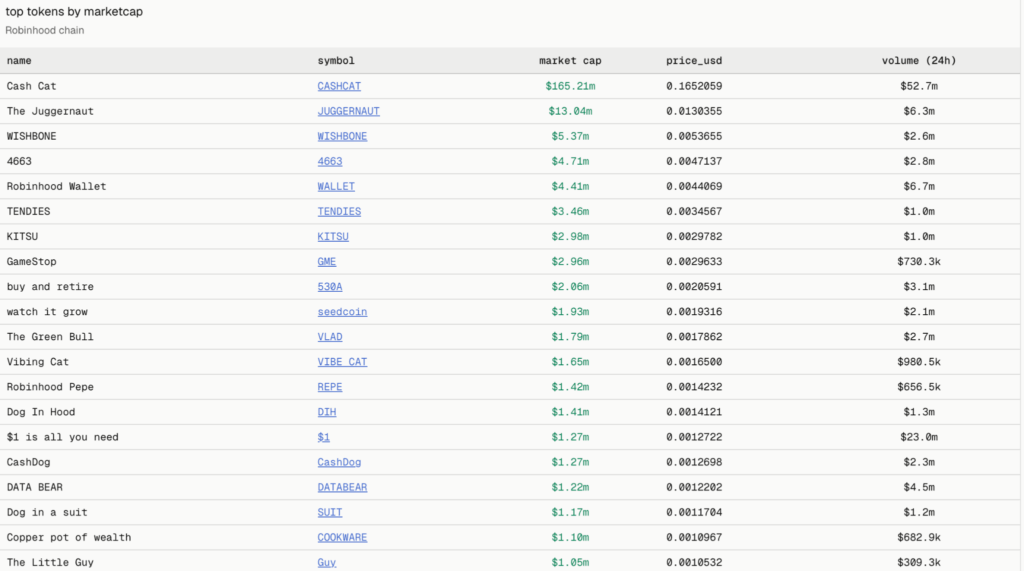
After Robinhood chief executive Vlad Tenev described memecoins as a legitimate part of the chain’s market on July 8, several launchpads recorded an average of about 18,600 new tokens per day. Twenty memecoins on the network now hold market capitalizations above $1 million.
Source: Dune
The transaction increase has reflected low fees, new token launches, and short-term trading demand. The July 11 fee rise also tracked the memecoin rally rather than a stable pattern of tokenized-equity transfers.
September Marks the Key Usage Test
The current transaction lead emerged during a launch period that included free gas, a new blockchain, viral memecoin activity and access to roughly 23 million Robinhood brokerage users.
Base also experienced launch-period speculation before building a broader developer ecosystem. Robinhood Chain’s activity will become easier to measure after the gas promotion ends, and users begin covering their own transaction costs.
Robinhood’s second-quarter earnings report in early August will be the first company update to include live mainnet activity. September will provide a clearer comparison once the 90-day subsidy expires and transaction data reflects activity without the same fee support.