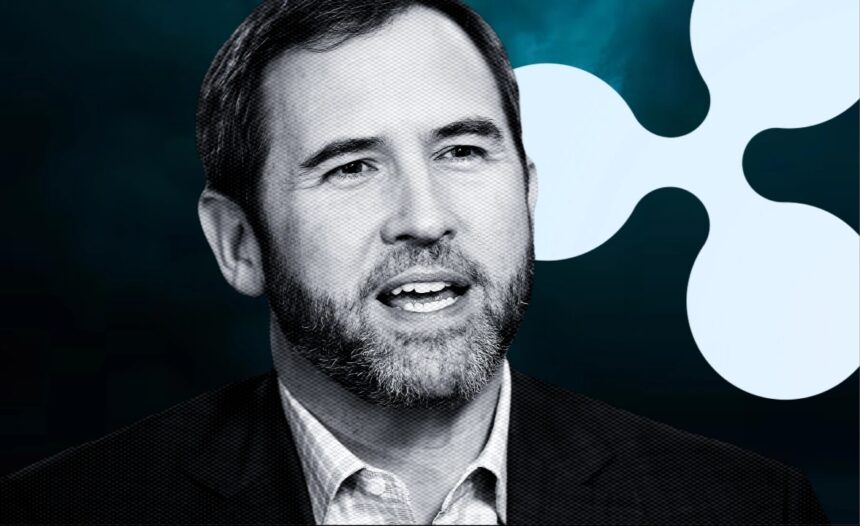
Ripple CEO Brad Garlinghouse has said in an interview that the company discussed closing after the US Securities and Exchange Commission sued it in 2020. Garlinghouse mentioned that Ripple could have divided its XRP supply among shareholders, declared that it held no tokens, and ended the dispute, but they decided not to because hundreds of employees would’ve been out of jobs.
Instead, Ripple spent the next four years in court and about $150 million on lawyers. Its US business stalled for about five years, as the SEC also targeted Brad over XRP he sold. Regulators offered to drop his case for a fine while continuing against Ripple, but Garlinghouse refused. He noted that XRP transactions usually settle in about four seconds and cost a fraction of one cent. Ripple sells software to banks and financial institutions, not individual users. Garlinghouse also compared XRP with Bitcoin, noting that one BTC transaction can cost around $10 and take about 10 minutes.
Ripple CEO rips into Gary Gensler-led SEC
In the interview, the Ripple CEO also mentioned that XRP serves another purpose. It handles payments faster, charges less, and supports more activity. Ripple uses the open-source XRP Ledger in its products. Asked why the SEC (specifically under Gary Gensler and Joe Biden) was angry, he joked, “They’re jerks.” He said the issue was applying old financial laws to new technology. Garlinghouse entered the internet industry in 1994, pointing to rules passed in 1996, with help from Al Gore.
He mentioned that the rules gave internet companies and investors clearer legal boundaries. According to Brad, the crypto companies had been asking for similar laws since most members of the industry were ready to comply but required clear limits. The SEC insisted that XRP was a security and not a currency or commodity. Brad noted that a security tends to give its holder rights within the business entity. XRP buyers received no Ripple shares, votes, board powers, or dividends. Ripple remains private. It raised venture capital in 2012, 2015, and 2016 by selling actual equity.
Garlinghouse also compared that equity with owning Apple Inc. (NASDAQ: AAPL) stock. Ripple owns substantial XRP, but Brad said it cannot command the network because the code is open source. He placed XRP closer to Bitcoin than corporate equity. The SEC said Ripple sold unregistered securities. Brad said the matter was civil, not criminal, though the possible penalty was enormous. In his visits to the SEC office in 2017, 2018, and 2019, Garlinghouse did not have legal representation.
A Harvard Business School alumnus, he never treated XRP as a security but only explained the Ripple system to the SEC office personnel. “Not once did someone say to me, Brad, we think XRP might be a security,” he said. When the agency later sued both him and Ripple, Brad questioned whether its theory meant every XRP holder who sold tokens had also broken securities law.
He said the personal charge was meant to pressure him. Brad called the SEC’s conduct “distasteful” and “maybe unethical.” Ripple repeatedly asked for clear guidance, yet regulators gave none before suing. Ripple won after four years. Trump later appointed a new chair who adopted a different approach and engaged crypto companies directly during the final years of the fight.