The HumidiFi protocol has risen to third place among Solana De-Fi exchanges as dark pool trading picks up pace.
After Aster’s success, HumidiFi saw large amounts of traffic, surpassing other platform giants like Orca and Meteor.
Record Volumes Strengthen HumidiFi Position
The protocol recorded a trading of $8.55 billion in the last week. HumidiFi reached an all-time high of $1.91 billion on September 25. During peak trading periods, the platform reached up to 15% of Solana’s on-chain volumes. This expansion was achieved in the absence of a retail-oriented front end at HumidiFi. Other protocols, including ZeroFi and SolFi, were also active but have fallen behind.
HumidiFi is a liquidity pool that trades with one market maker. Trading is not free without permission, but it offers regulated spreads and slippage. The trading business revolves around the most liquid markets, and the most popular pair is SOL vs. USDC.
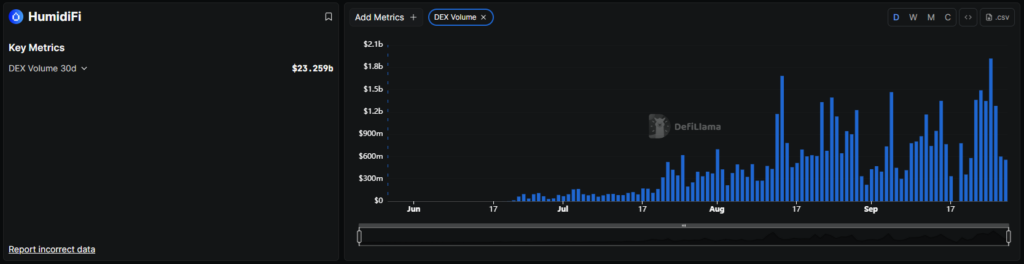
HumidiFi reached peak volumes in September, driven by demand for dark pools and veiled orders. | Source: DeFiLlama.
Dark Pools Reduce Sandwich Attacks
Dark pool trading is becoming popular among institutional Solana users who want to avoid front-running. These pits also assist in curbing sandwich attacks, which ripped traders off over ten days at a cost of over 4 million. In contrast to transparent decentralized exchanges, HumidiFi protects whale activity against on-chain analytics and predatory counter-trading.
Raydium remains the leader in the DEX retail space in Solana. But HumidiFi and Aster are drawing in bigger traders who value liquidity and little slippage. Their shrouded trading environment has now become a favorite among high-volume traders.
Jupiter Benefits from Dark Pool Activity
The growth in dark pool activity has increased Jupiter’s trading volume. Jupiter sends instructions through decentralized exchanges and provides exposure to platforms that do not have a direct retail interface. HumidiFi has taken the pre-eminent position of routed SOL and USDC orders, comprising up to 80 percent of orders when activity is at its peak.
Even though Jupiter still has to undertake transactions with meme tokens, dark pools remain its driver for large-scale liquidity. SolFi and smaller pools also play a role, although HumidiFi is the leader in making an impact in the market.
The increase in the SOL and USDC trade was characterized by Solana dropping down to below 200 momentarily. SOL recovered to $208.22 by the new week, and new inflows in the USDC also backed it. The supply of the stablecoin in circulation increased by 7.15% to reach a high of 13.79 billion in seven days. USDC represents 9.65 billion of this supply, rising 10 percent in the last month.