Ethereum transactions have reached a new all-time high, but the surge is raising security concerns across the network.
Daily activity climbed above 3.62 million transactions in late April, according to Etherscan data cited in the report. The increase reflects cheaper gas fees and a sharp rise in address poisoning attacks, rather than stronger high-value transfer demand.
Lower Fees Drive Higher Activity
Ethereum’s latest scaling shift has made the main network cheaper for everyday transfers. The Glamsterdam upgrade reportedly reduced gas fees by 78%, allowing standard transactions to cost as little as $0.004. Complex swaps and DEX activity also became cheaper, with some operations falling near $0.07.
However, lower costs have also made mass spam campaigns more affordable. Attackers can now send dust amounts, zero-value tokens, and fake transaction records across thousands of wallets at minimal cost. This has turned cheap activity into a security concern for Ethereum users.
Address Poisoning Expands Across Ethereum
Address poisoning attacks target user habits and wallet history. Scammers create fake addresses that look similar to legitimate ones, then send small transfers or fake records to a victim’s wallet. If a user copies the wrong address from the transaction history, funds may move to the attacker.
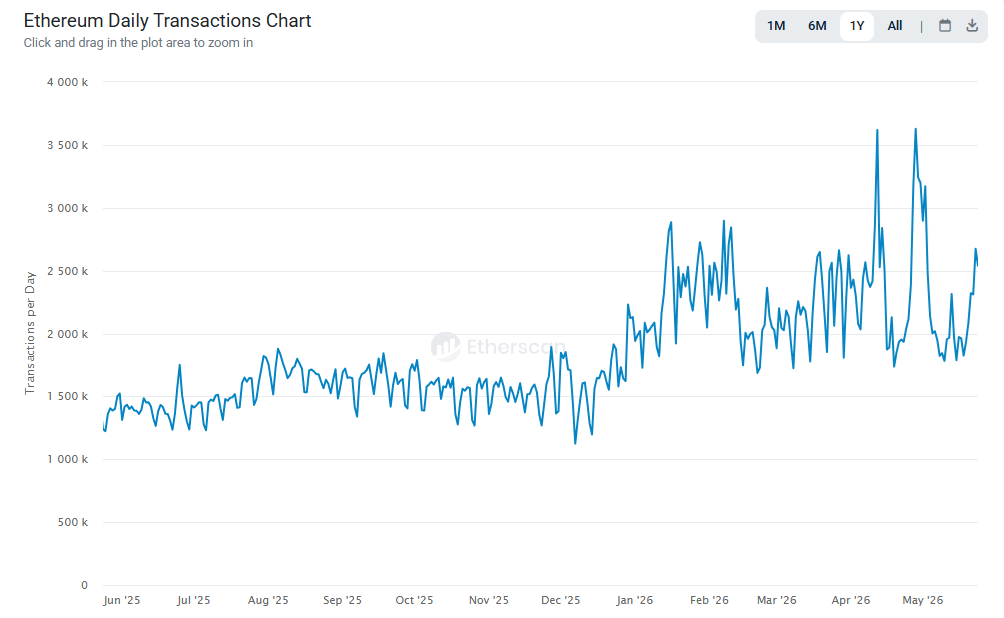
Ethereum transactions hold near their highest level after the latest Glamsterdam decrease in fees. Investigators noted most of the additional traffic is due to address poisoning attacks. | Source: Etherscan.
The report said Ethereum’s large holders and old wallets remain attractive targets because many still hold major ETH or token balances. Past fee reductions also coincided with sharp jumps in dusting activity. In 2026, on-chain analysis linked address poisoning to $62 million in lost funds.
The threat has also become easier to access. Address poisoning tools are reportedly sold through Telegram, which allows more actors to launch automated campaigns. Etherscan experts noted that attacks have moved beyond manual attempts and now operate at an industrial scale.
Users Face Growing Wallet Risks
Wallet users are seeing more fake activity appear in their histories. Some attacks involve zero-value token transfers, while others use small amounts of real tokens such as USDT. In some cases, each genuine transaction triggers several fake records from flagged addresses.
Security risks are also spreading into AI agent workflows. New malicious plugins can intercept copied wallet addresses and replace them with attacker-controlled addresses. This makes manual checks harder, especially for users who depend on automated tools.
The safest approach remains simple and consistent. Users should avoid copying addresses from wallet history and should rely on saved contacts, verified addresses, and wallets with anti-phishing tools. Ethereum’s transparency helps public verification, but it also gives attackers open data to profile active wallets.