DEX volume fell sharply in April as decentralized trading lost momentum across spot and futures markets.
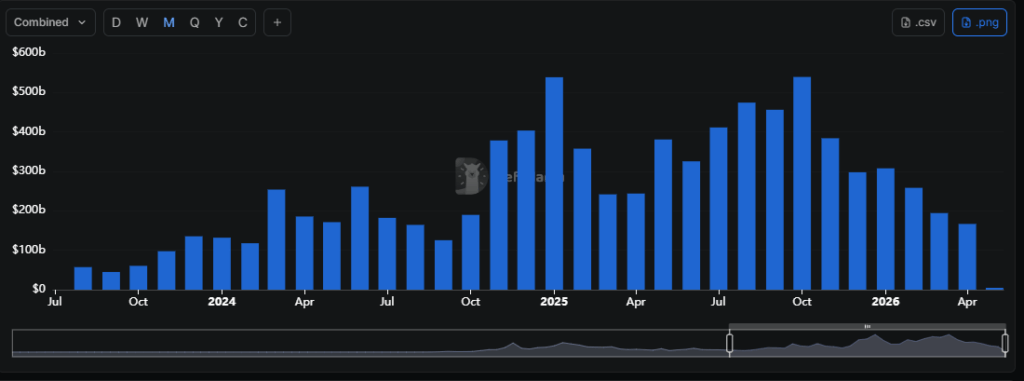
DeFi Llama data showed monthly activity at $166.78 billion, the weakest level since August 2024. The decline reflected weaker token demand, lower risk appetite, and a broader shift away from speculative DeFi trading.
DEX Trading Drops to Multi-Month Low
Decentralized exchange activity continued its downward trend after peaking in October 2025. April volume stood about 59% below that high, showing how far market participation has cooled. The decline also ended the stronger start seen in early 2025, when monthly DEX volumes outpaced January, February, and March levels from the previous five years.
DEX activity still accounted for 14.57% of centralized exchange trading. That ratio stayed near its usual range because centralized platforms also faced trader outflows. However, the stable ratio did not signal strength in DeFi markets. Instead, it showed that liquidity weakened across multiple trading venues.
Liquidity Shifts Away From Token Swaps
The slowdown mainly came from weaker activity on Uniswap and PancakeSwap, two of the largest decentralized exchanges. Traders moved toward Hyperliquid and HIP-3, where they gained exposure to perpetual futures linked to stocks, gold, and oil. This shift showed that decentralized trading demand remained active, but traders preferred broader markets over token swaps.
Token speculation also slowed as meme coins lost momentum. Many traders no longer expected market hype to lift most assets. As a result, liquidity became more selective and moved toward assets supported by market makers or active liquidity providers.
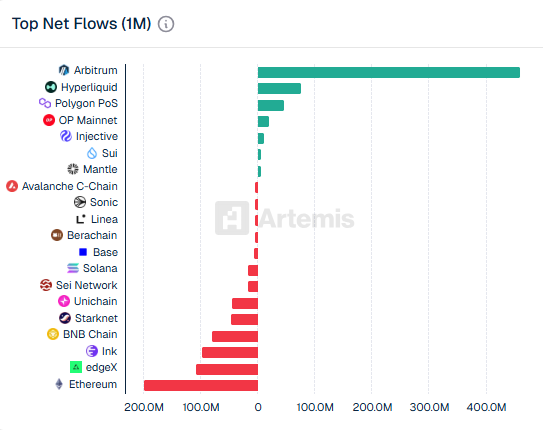
Stablecoin supply remained near record levels, but those funds did not flow strongly into DEX pools. Artemis data also showed notable liquidity outflows from Ethereum and BNB Chain in the past month. Some capital moved toward Hyperliquid and Polymarket, which continued to attract speculative trading that previously supported DEX activity.
New token inflows also weakened. Fewer token sales and slower ICO activity reduced fresh listings. Many meme tokens from Pump.fun remained at early trading stages and failed to move onto larger exchanges.
DeFi Hacks Weaken Market Confidence
April also brought a high number of DeFi hacks, which hurt confidence in smart contracts and liquidity pools. Traders viewed DEX platforms as riskier because flawed contracts can expose funds to exploits, drained pools, and stolen tokens.
Most exchange outflows came from Ethereum and other EVM-compatible networks. Solana moved against the broader trend, supported by rising USDC liquidity and stronger activity on Meteora. The platform overtook Raydium and PumpSwap as Solana’s leading DEX, while fewer major security issues helped preserve trader confidence.