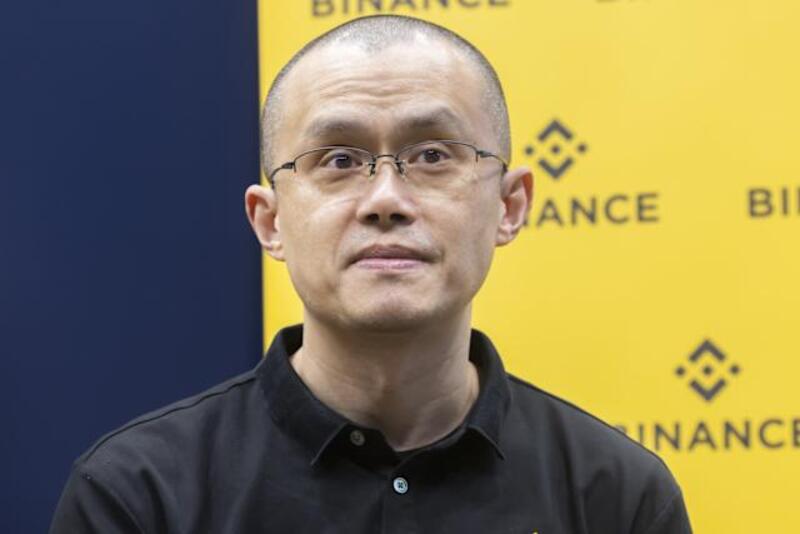
CZ has argued that AI agents could make crypto-powered finance more useful worldwide as autonomous software demands payment systems built for digital activity.
Changpeng Zhao, Binance founder, told Galaxy Research that artificial intelligence may pose an existential risk to humans, but not to crypto. His June 18 interview also covered Bitcoin’s market cycle, Satoshi Nakamoto’s holdings, Hyperliquid, and AI agents.
Zhao said autonomous software may adopt crypto rails before banks can support non-human economic activity. He argued that AI agents need open, programmable, and borderless payment tools. That need, he said, gives digital assets a practical role beyond trading.
AI Agents Need Programmable Rails
Zhao separated AI risks from its possible benefits to crypto. AI may affect jobs, security, and human control. However, he does not view those risks as a direct threat to digital assets.
Autonomous software cannot easily open bank accounts, complete onboarding, or rely on slow compliance processes. A crypto wallet can be created quickly and used across borders.
At Davos, Zhao said, “The native currency for AI agents is going to be crypto,” according to DL News.
Stablecoins Could Support Agent Payments
Circle CEO Jeremy Allaire said at Davos that billions of AI agents could conduct transactions within three to five years. Such transactions could involve data, API calls, computing power, storage, and services.
Analysts at Andreessen Horowitz have described a similar model. AI agents could pay instantly for data, GPU time, or API access without invoices, reconciliation, or batching.
The same rails may support stablecoin use and low-cost settlement. The World Bank’s Global Findex Database 2025 shows account ownership reached record levels. However, about 1.3 billion adults remain outside formal finance.
Adoption Remains The Main Test
Zhao’s wider argument links AI payments with financial inclusion. Internet-native payment systems could serve autonomous agents and users who lack bank access.
Still, crypto does not remove every barrier. Users face volatility, regulation, fraud risks, weak interfaces, and unreliable on-ramps.
Zhao is bullish on Bitcoin and crypto despite stepping back from supercycle timing calls. Through YZi Labs, he remains focused on blockchain, AI, and biotech investments. He prefers “AI shovels,” including data centers, power, and computing hardware, according to Yahoo Finance.
His post-Binance role frames the debate. Zhao resigned as Binance CEO after pleading guilty in 2023 to violating the Bank Secrecy Act. Binance agreed to pay $4.3 billion in penalties, according to the U.S. Department of Justice.
Bitwise estimated that AI and crypto could add $20 trillion to global GDP by 2030. DL News reported that investors placed more than $565 million into AI and crypto startups in 2025.