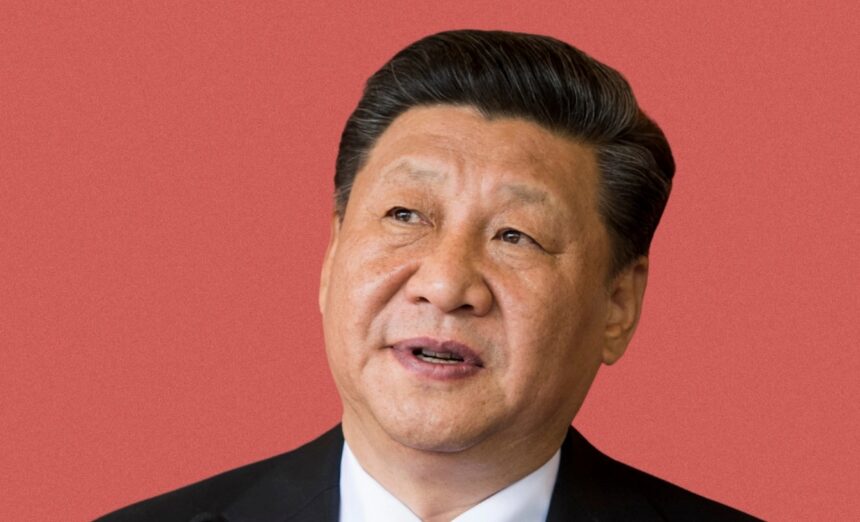
China hit its 5% GDP growth target for 2025, according to a statement from President Xi Jinping. Speaking at the annual meeting of the Chinese People’s Political Consultative Conference, Jinping called the year “extraordinary” for China as it defied global pressures.
“The growth rate is expected to reach around 5%, continuing to rank high among the world’s major economies,” he said. He pointed to a shift, noting that things moved away from just growing fast and toward improving quality and innovation. Xi also warned against “reckless” projects and backed slowing down in certain regions to avoid unnecessary risks.
China records recovery in factory and service industries
The data backs up the claim made by Jinping. The official manufacturing PMI for December hit 50.1, jumping past the breakeven mark and beating the 49.2 forecast. That represents a rise from November’s 49.2. The composite PMI, which includes both manufacturing and services, also rose to 50.7 from 49.7, a clear step into expansion territory.
Services and construction were also affected positively. The non-manufacturing PMI climbed to 50.2, up from 49.5 the month before. All of these point to a broader comeback after a rough patch earlier in the year. Huo Lihui from China’s National Bureau of Statistics said December saw a clear boost in new orders, marking a “significant expansion” in both supply and demand.
The private sector floated impressive numbers. A separate PMI by independent firm RatingDog reached 50.1 in December, up from 49.9. This also beat the expected figure of 49.8. Yao Yu, founder of RatingDog, said manufacturing is growing again. He said new orders have been rising for seven months straight, helped by product launches and more business activity.
Small businesses are suffering despite impressive numbers
However, Yao noted that while companies are still hopeful for 2026, their confidence has dropped below normal levels. The National Bureau of Statistics showed that large enterprises are leading the recovery, as their PMI jumped to 50.8, 1.5 points higher than the month before. Medium-sized firms edged up to 49.8, but that’s still below the growth line.
Small businesses are still shrinking, with their index dropping to 48.6, a 0.5 point fall from November. Markets didn’t react with much cheer, as the Hang Seng index in Hong Kong dropped 0.83%, while the CSI 300 on the mainland rose 0.33%. Signals remain mixed, as investors watch closely for more signs of long-term momentum. The numbers come just days after the central bank decided to leave loan prime rates unchanged.
This comes as the economy continues to struggle with weak demand and a housing sector mess. November’s retail sales and industrial output came in below forecasts. Even fixed asset investment fell, another sign the recovery still has holes. Meanwhile, Beijing is also trying to balance currency pressures. The yuan is allowed to rise slowly, which keeps trading partners calm and blocks fast inflows of speculative cash.