
BTC whales stage the largest accumulation wave since 2013, with 270,000 BTC added in 30 days.
The surge reflects sustained demand from large holders while exchange balances continue to shrink. Market data suggests strategic accumulation rather than speculative buying, as Bitcoin trades within a tight range.
Recent activity shows that large investors are driving the market’s direction. Whale-sized orders have dominated spot trading, replacing retail-led momentum seen in late 2025. This shift highlights a more calculated approach, with major holders building positions during periods of price stability.
Whale accumulation reshapes market dynamics
Whale wallets have steadily increased their holdings, signaling confidence despite recent volatility. According to Bitfinex data, the current accumulation pace has not been seen in over a decade. Spot demand remains firm, even as derivatives markets show weaker participation.
Large investors appear to favor sideways conditions for accumulation. Retail traders often buy during price drops, but whales tend to act during consolidation phases. This pattern is visible in the current market structure, where Bitcoin trades within a defined range.
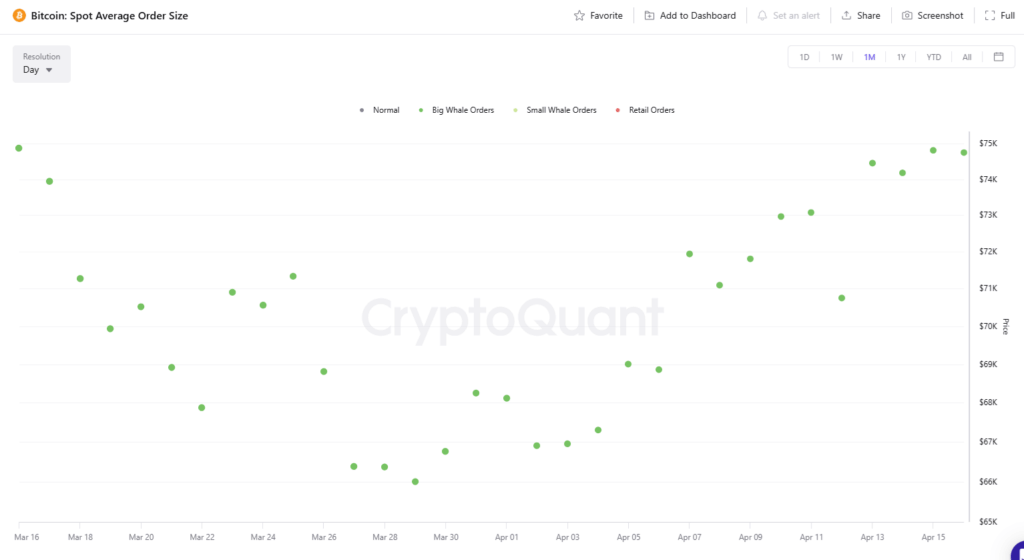
BTC whale orders were the main driver of the spot market in the past month. | Source: Cryptoquant
The dominance of whale orders has reduced the influence of smaller participants. Their consistent buying has supported price stability, even without strong retail inflows. This trend suggests that institutional-style strategies are shaping the current cycle.
Exchange reserves hit multi-year lows
The impact of whale buying is visible in exchange balances. Bitcoin reserves on exchanges have dropped to 2.68 million coins, marking a multi-year low. This decline reflects a steady outflow of assets into private wallets.
Recent transfer data support this trend. Over 6,300 BTC were left on Binance in the past 24 hours. More than 13,000 BTC exited the platform over the past month. The pace of withdrawals has accelerated, reaching levels close to historical highs.
Whole-coin transfers to exchanges have also become less frequent. This indicates reduced intent to sell among large holders. Lower exchange supply often tightens market liquidity and can influence price movements over time.
Holders resist selling pressure
Despite market uncertainty, Bitcoin holders are not showing signs of capitulation. Most wallets holding coins for up to seven years remain profitable. Bitcoin continues to trade above $75,000, supporting investor confidence.
The average realized price has climbed to $72,300. This reduces pressure to sell, as many holders remain in profit. Around 8.75 million BTC are still held at a loss, but this figure is improving gradually.
The current cycle shows fewer forced sell-offs compared to previous downturns. Investors appear to be seeking alternative liquidity sources instead of selling their holdings. This behavior supports the broader accumulation narrative.
At the same time, corporate demand is adding to market absorption. Strategy has increased its exposure through digital credit-backed purchases. This additional demand helps offset selling pressure from other participants.
Bitcoin order book data also reflects strong demand zones. Sell walls are forming near $77,980, with smaller barriers at $75,500 and $76,000. These levels indicate active market participation and resistance points.
BTC holders now await a clear directional move. Whale and shark wallets remain key indicators of sentiment. Their activity continues to shape expectations for the next phase of the market cycle.