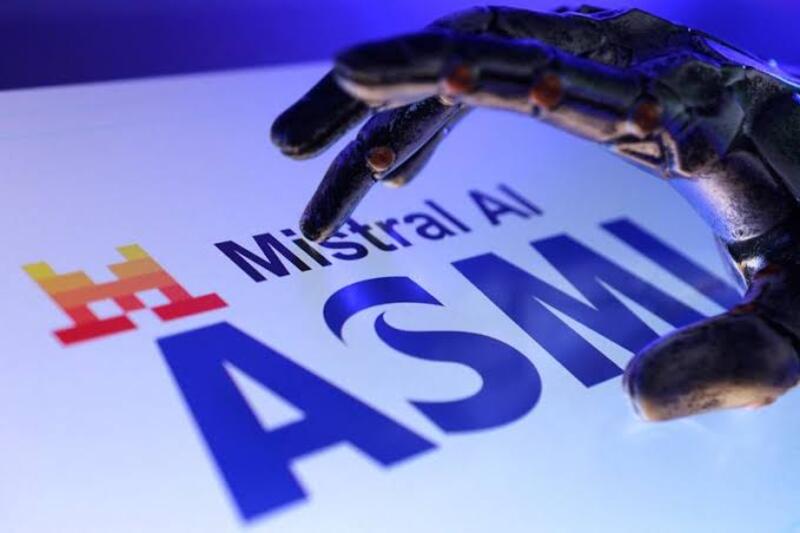
Mistral AI secured €3 billion, or $3.5 billion, in Series D funding on September 8, lifting the French company’s valuation above €21 billion in Europe’s largest technology fundraising round.
Samsung Electronics led the financing, joined by Scaleup Europe Fund, PSG Equity, Advent, a16z, NVIDIA, Bpifrance, Index Ventures, previous shareholders, BlackRock-managed funds, and Luxembourg. EQT managed the round.
Mistral AI Lands Record European Funding
Founded three years ago in Paris, Mistral has doubled its valuation within a year and serves more than 125 enterprise customers across 20 countries, including Airbus, ASML, and HSBC.
“This round means we can move faster on R&D, products, infrastructure and keep giving organisations the ability to run AI at scale, on their own terms,” chief executive and co-founder Arthur Mensch said in a statement carried by France 24.
Mensch said “Organisations want to industrialise AI inside systems that are already complex,” while working with their own data, tools, and compliance requirements.
Mistral Promotes Sovereign AI Strategy
Mistral presents its sovereign AI approach as allowing customers to keep data internally, customise models, use private compute, and audit production systems.
Chief financial officer Johan Bergqvist told AFP that enterprise competition does not depend on company size alone. He described Mistral as “more of a mix of Palantir and Anthropic when it comes to what we can offer” and said “our need for capital is not as vast as some of those competitors.”
France has selected Mistral models for a civil service tool. A domestic supplier replaced Palantir systems used by French intelligence services in June. Mistral also signed a July compute agreement with Microsoft for its first French data center.
ASML Strengthens European Chip Partnerships
ASML, Europe’s most valuable company and leader of Mistral’s earlier Series C, expanded High NA EUV partnerships with Samsung and TSMC, strengthening Europe’s advanced chip base.
Samsung said it plans to become the first company to use ASML’s High NA machines for DRAM production, targeting 2028. High NA increases numerical aperture from 0.33 to 0.55, enabling finer patterns and smaller components.
Samsung also joined an ASML-led consortium seeking to move photomask standards from 6 inches to 12 inches. ASML and TSMC announced the same push a day earlier, targeting a pilot line by 2031 and advanced-node production by 2033. TSMC plans High NA high-volume manufacturing from 2030.
The announcements came as Europe remained behind the United States and China in AI scale. The World Economic Forum said Europe had produced three foundation models, compared with 40 in the United States and 15 in China, while US hyperscalers controlled nearly 70% of Europe’s cloud market.
Together, the funding and chip agreements highlighted Europe’s effort to expand AI models, semiconductor capacity, compute, and infrastructure.