
Kalshi crypto contract volume reached a record $217.98 million on July 15, marking the platform’s highest daily total in the category.
Artemis data shows activity has risen sharply since January, when daily volume stood near $5 million. The latest figure represents an increase of about 44 times within roughly seven months.
The increase has occurred while broader cryptocurrency prices stayed under pressure through much of the year.
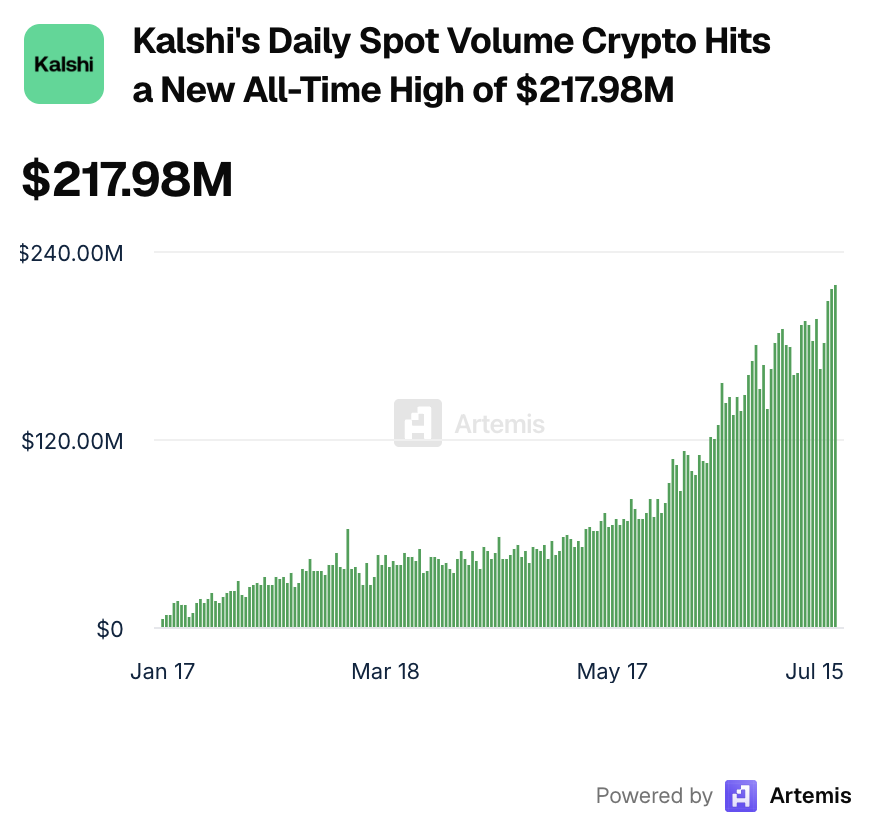
The expansion comes while Bitcoin trades about 30% lower for the year. Rather than depending on direct cryptocurrency ownership, Kalshi users trade fixed-risk contracts linked to future price outcomes. Each contract limits the possible loss to the amount paid, while a winning position returns one dollar per contract.
Fixed Risk Contracts Draw More Traders
Crypto contract volume has climbed steadily since May, despite weak and largely directionless market conditions. The structure gives traders a defined way to express a price view without buying or holding the underlying asset.
A user can place a contract on where Bitcoin may trade by the end of a week and know the maximum exposure before entering.
The contract cannot lose more than its purchase price. That capped structure differs from spot trading, where changing prices can create uncertain losses during sharp market swings.
The record also arrives outside a broad crypto rally. Volume growth during a market decline shows that activity is not limited to periods of rising prices.
Instead, users are returning to contracts that allow them to trade market direction with predetermined risk.
CFTC Oversight Expands Kalshi Access
Kalshi operates under Commodity Futures Trading Commission regulation and offers access across all 50 states. Its contracts are also distributed through Robinhood and Webull, placing them inside brokerage platforms already used by millions of funded customers.
That distribution reduces several barriers associated with crypto prediction markets. Users do not need an onchain wallet or a separate account at an unfamiliar venue. They can access contracts through applications they already use for other financial products.
The combination of federal regulation and brokerage integration gives Kalshi a broader route to retail traders. It also separates the platform from services that depend mainly on crypto-native infrastructure and wallet-based participation.
Kalshi Takes Former Polymarket Ground
Kalshi now accounts for about 84% of crypto prediction-market volume, taking ground that Polymarket previously controlled. The shift reflects Kalshi’s rapid expansion within a category once closely associated with its rival.
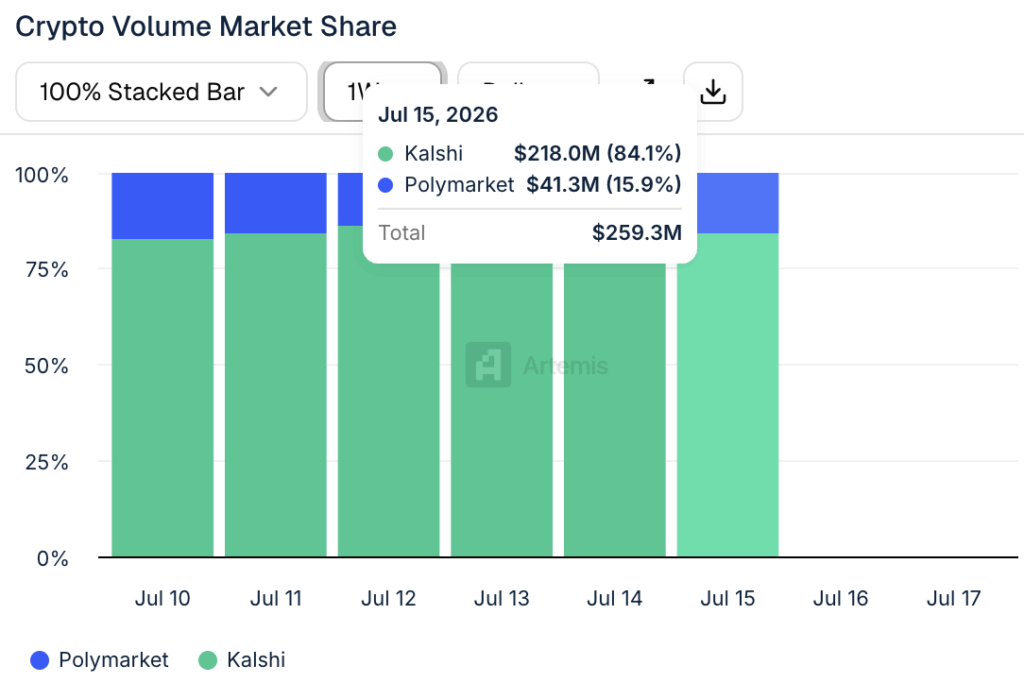
Kalshi carries a $22 billion valuation and is widely expected to pursue an initial public offering. Its July 15 record adds to the platform’s documented growth in daily crypto contracts since January. Those contracts give users a regulated venue for trading views on digital asset prices without directly buying or holding cryptocurrency.