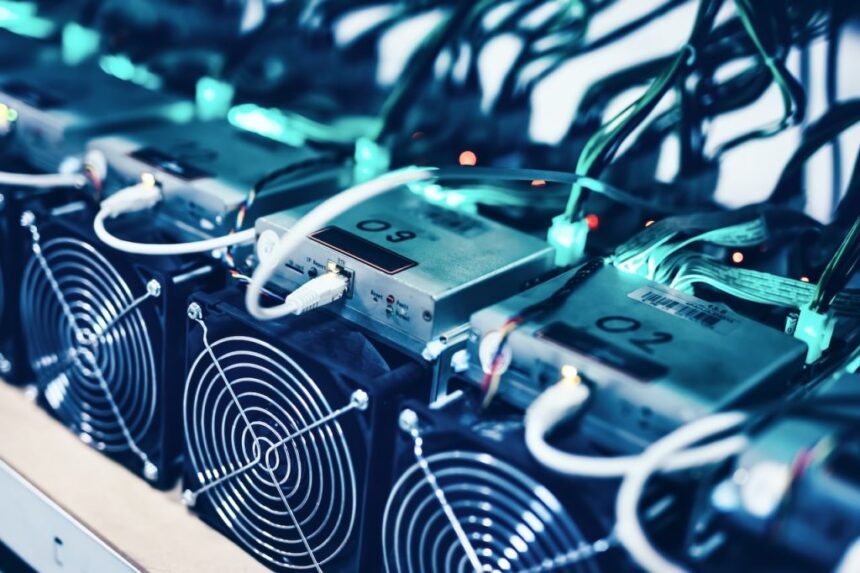
The difficulty of Bitcoin mining is expected to rise in December since the network is set to undergo its next adjustment date on December 11.
Recent indicators reveal that miner profitability is still at record lows, which is a symptom of the current problems in the industry.
Difficulty adjusting in the future.
The next reevaluation is estimated at block 927,369 at approximately 12:09 AM UTC (CoinWarz). The challenge is likely to increase by a small margin to 149.30 trillion to 149.80 trillion. The adjustment that was made above was a decrease of 152.2 trillion to 149.3 trillion, which led to an average of 9.97 minutes block time. This is only slightly less than the normal 10-minute block time of Bitcoin.
The price of hashprices, the price of expected earnings per unit of computational power, is currently approximately hashprice = $38.3 per PH/s per day. This is after hitting a record low of less than $35 PH/s on November 21. A minimum of 40 PH/s is needed to make miners pay even, and survival in the industry is complicated. Several miners are changing their plans or temporarily closing machines to control their expenses.
Operation and mining supply chain changes
Mining equipment suppliers have also not been spared by the drop in hash price as they are getting fewer orders. Firms such as Bitdeer have shifted to self-mining as an alternative to curb diminished demand. Increasing prices and low profit margins have compelled miners to consider other ventures such as AI data and computing services. Cipher Mining, e.g., was able to sign a deal with Amazon Web Services of $5.5 billion to provide computing power over 15 years. These company changes enable the mining companies to earn money even when the returns on BTC are stable.
Regulatory and geopolitical issues
Regulatory restrictions and international tensions are other problems that have compelled the mining industry. The API of Abu Dhabi API recently prohibited crypto mining on arable land by imposing a maximum fine of 100,000 AED on infractions.
In the meantime, the US Department of Homeland Security is scrutinizing Bitmain due to the fear that its equipment may be used to spy on its users remotely. Bitmain manufactures most of the ASIC miners that are used in proof-of-work cryptocurrencies and dominates about 80% of the market. This would take down world mining processes and supply chains through any sanctions and trade restrictions.
Bitcoin mining is still under stress with the increase in difficulty, low profitability, and external risks. The miners are modifying their tactics to survive in case of market, regulatory, and geopolitical uncertainties.