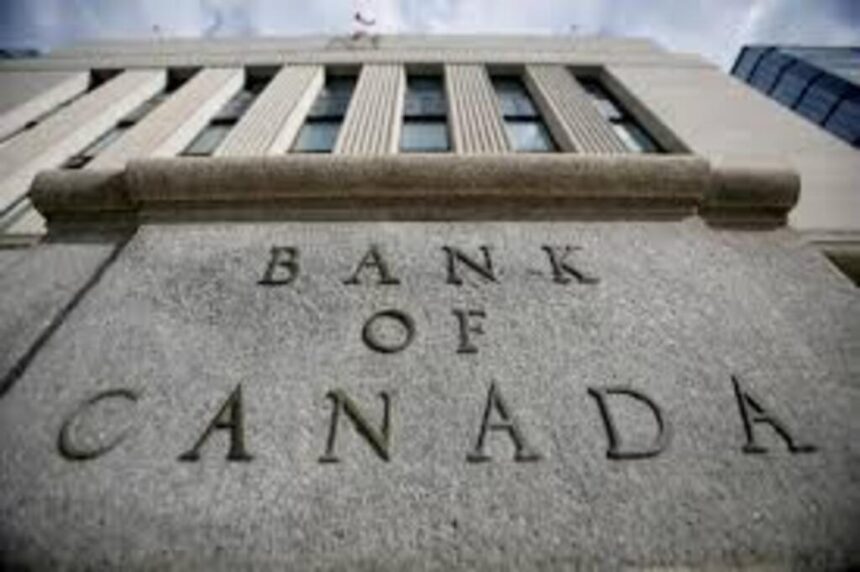
The Bank of Canada (BoC) will prioritize evaluating potential economic risks before making its next interest rate decision later this month.
Governor Tiff Macklem stated that the central bank aims to take a more cautious and forward-looking approach as it prepares for the announcement on October 29.
Cautious Outlook Before Interest Rate Announcement
Governor Macklem emphasized that the BoC must remain realistic about its forecasts and pay close attention to emerging risks. During a conference call from Washington, he explained that while uncertainty remains, it is lower than earlier this year. The central bank plans to use a new base case projection to assess future conditions more accurately.
The BoC’s upcoming announcement will include updated economic and inflation forecasts, marking the return of the projections that were paused earlier due to trade tensions and global uncertainty. Market analysts currently estimate a 64% chance of a 25-basis-point rate cut, which would lower the benchmark rate to 2.25%. The BoC had previously reduced rates by 25 basis points in September, bringing the rate down to 2.5%.
Key Data to Inform the Decision
Before the rate decision, the BoC will analyze results from a business and consumer survey scheduled for October 20. This survey will provide insights into inflation expectations, investment intentions, and household spending. Additionally, the latest inflation data will be released on October 21, giving the bank updated information on September’s consumer prices.
Economists suggest that the central bank faces weaker-than-expected growth heading into the final quarter of the year. Alexandra Brown, a North American economist at Capital Economics Ltd., noted that manufacturing data points to softer economic momentum. Statistics Canada reported that manufacturing sales fell by 1% in August, though the decline was less severe than forecasted. The transportation sector saw the most significant drop at 5.7%, while food manufacturing decreased by 1.9%. Capital Economics now expects third-quarter GDP to expand by just 0.8% on an annualized basis, well below the BoC’s one percent estimate.
Global Concerns and IMF Collaboration
Canada’s economy contracted by 1.6% annually in the second quarter. While the BoC expects modest improvement ahead, Macklem acknowledged that growth remains sluggish and below its potential. He indicated that this would likely keep the output gap open for some time.
During recent meetings in Washington with G7 financial leaders and the International Monetary Fund (IMF), Macklem highlighted growing global imbalances that could heighten risks and trade tensions. He welcomed the IMF’s decision to strengthen its monitoring of these global imbalances, calling it a vital step toward maintaining financial stability.
As the Bank of Canada prepares for its final rate decision of the year, its focus on potential risks reflects a cautious stance amid uncertain global conditions. With economic growth faltering and inflation data due soon, policymakers appear determined to balance optimism with prudence as they assess the path forward for Canada’s economy.