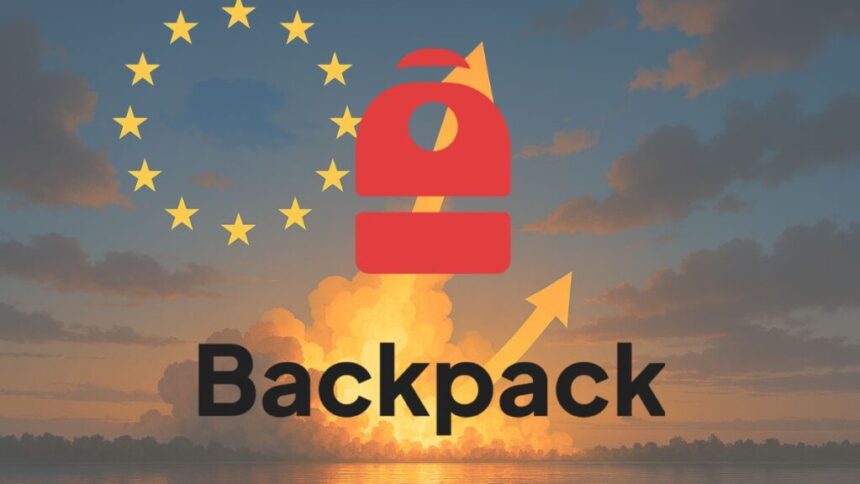
Backpack is a crypto exchange site that will be launched in several U.S. states in the second half of the year.
The transition will wait to be approved by the required licenses. Backpack CEO Armani Ferrante stressed that the company is a leading market in the U.S. based on its leading position in the digital asset market.
Backpack’s International Expansion and Regulatory Strategy
Backpack was established in 2022 and was initially based on supplying a self-custodial wallet to users in the U.S. However, the company has shifted to international markets, where it is easier and faster to get regulatory approvals, such as Dubai, Japan, and some of the European markets. This week, the company registered in Cyprus to provide perpetual futures trading in the EU under the MiFID II regulation.
Real-Time Proof of Reserves to Boost Transparency
Backpack has made it one of its pillars to have a real-time demonstration of the reserves. According to Ferrante, customer trust is an essential part of earning transparency, particularly following the fall of FTX. The platform of Backpack offers daily reserve reports so that one can check what he or she holds at any time. It is a direct response to the opaque practices observed in the industry, Ferrante says.
Expanding U.S. Presence Despite Regulatory Challenges
Despite the regulatory uncertainty that the Biden administration has characterized its approach to digital assets, Backpack is not leaving the U.S. market. The company’s self-custodial wallet service has not encountered any major regulatory challenge. Backpack’s greatest workforce is situated in the U.S., where many of its wallets are as well, noted Ferrante. Following the market challenges, the company has expanded globally, with its assets at more than 170 billion and a 24-hours volume of 74.7 million.
With the help of transparency and security that the Backpack will focus on as it launches in the U.S. market, the values of the platform can appeal to customers who want a trustworthy exchange. The firm intends to use its global experience to take a large portion of the American market.